- Best time
- Front-load outdoor sights into the dry morning
- Heat
- Still hot and humid
- Rain plan
- Pair an outdoor temple morning with an indoor museum
What October weather feels like
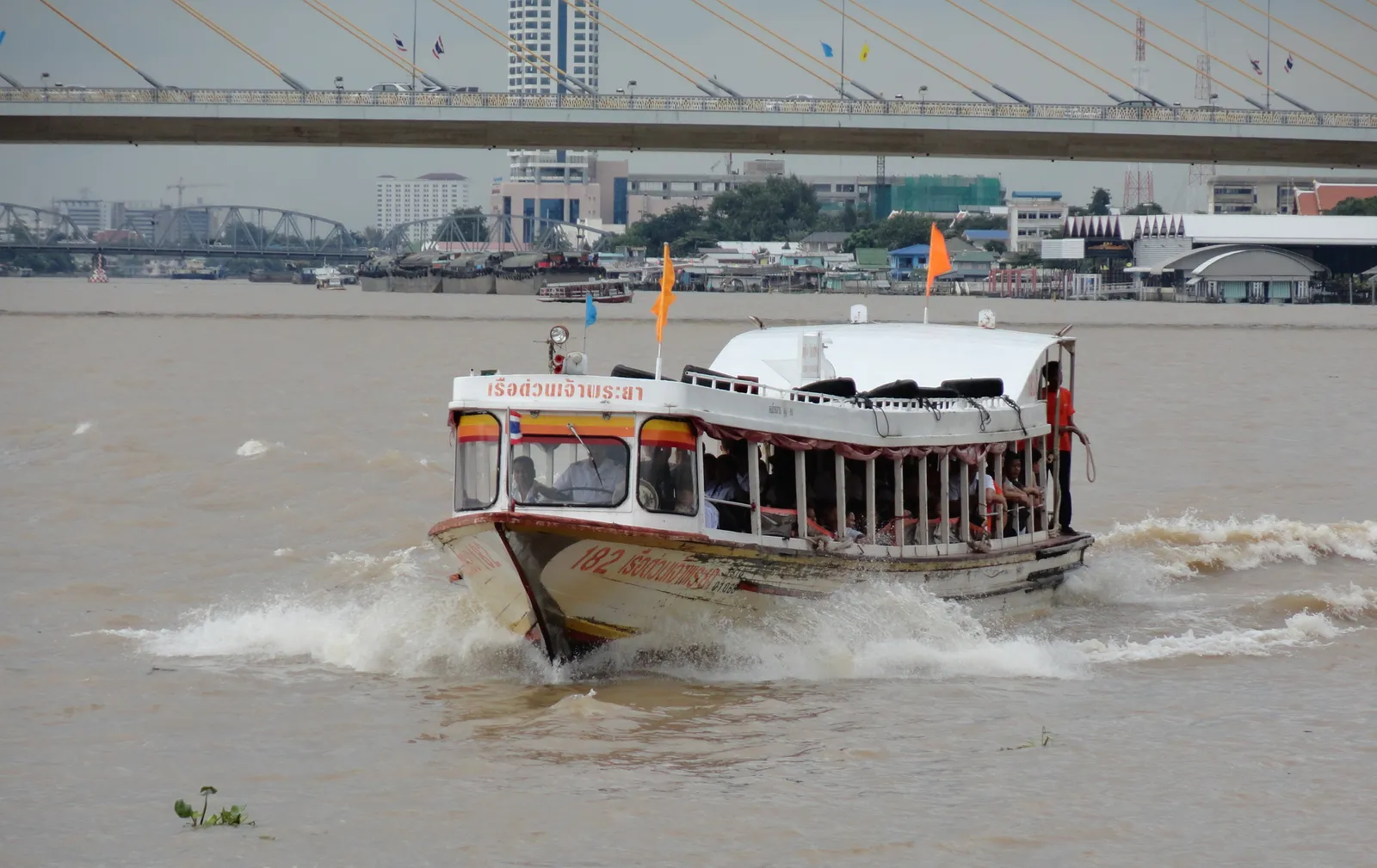
October is the final stretch of Bangkok's rainy/green season (roughly June to October), and it behaves much like September: warm, humid and prone to dramatic afternoon storms. Expect daytime highs in the low thirties Celsius, nights in the mid-twenties, and humidity that makes the air feel heavier than the thermometer suggests.
The rain is rarely an all-day affair. A typical October day starts bright, builds heat through late morning, then delivers a sharp downpour in the afternoon or early evening. These storms can be intense, with thunder and brief street flooding in low-lying areas, but they usually pass within an hour or two and leave behind cooler, cleaner air. By the last week of the month you may catch the first faint hints of the cool season — a few mornings that feel less sticky, a touch more breeze. It is still firmly tropical, but the worst humidity is on its way out.
That transition is the quiet appeal of October. The crowds and prices have not yet caught up with the improving weather, so you get many of the rewards of the cool season at green-season cost — provided you plan around the storms rather than against them.

- Typical highs in the low thirties Celsius, lows in the mid-twenties.
- Afternoon to early-evening downpours are common; mornings are usually dry.
- Carry a compact umbrella or rain shell every day, even when it looks clear.
- Late October often feels slightly drier as the cool season nears.
The Vegetarian Festival in Yaowarat
October's signature event is the nine-day Vegetarian Festival, known in Thai as Tetsakan Kin Je. It follows the lunar calendar — usually late September into October — and for that stretch Bangkok becomes one of the easiest places on earth to eat plant-based. Yellow flags multiply over the stalls, ordinary noodle shops flip to all-jay menus, and even convenience stores roll out jay-labeled meals. The diet is strictly vegan and also drops pungent ingredients like garlic and onion, so it is genuinely meat- and dairy-free rather than loosely vegetarian.
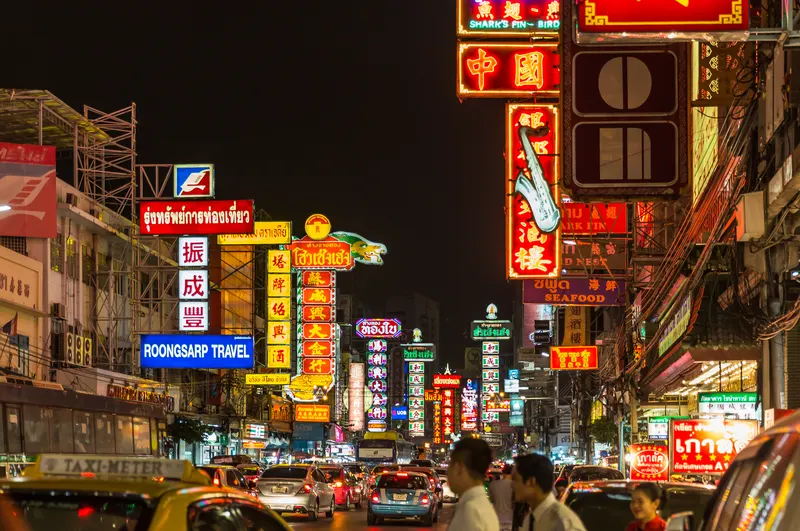
The heart of it is Yaowarat, Chinatown's main artery, which turns into a sprawling vegan street kitchen for the festival. It is a fantastic time to eat your way along the street whether or not you keep the diet, grazing on mock-meat stir-fries, vegetable curries, noodles and Thai-Chinese sweets under a canopy of yellow banners. Wat Mangkon Kamalawat, the spiritual center of Chinese Bangkok, goes especially electric — thick with incense, offerings and crowds.
Practicalities: come hungry and come on the MRT, which drops you at Wat Mangkon station in the thick of it and saves you from Chinatown's notorious traffic. Carry small cash for the stalls, eat where it is busy and freshly cooked, and pace your spice. Evenings are the liveliest, and a wet afternoon storm tends to clear well before the festival hits its stride after dark.
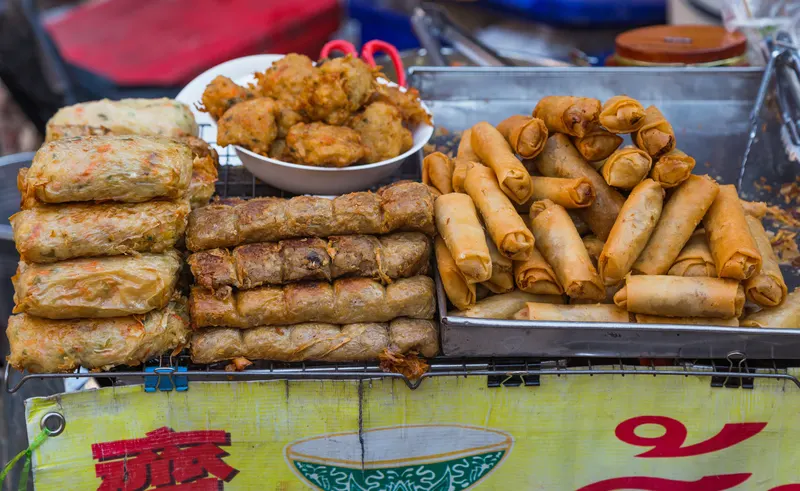
- Nine days of strictly vegan, garlic- and onion-free Thai-Chinese street food.
- Yaowarat and Wat Mangkon Kamalawat are the heart of the action.
- Take the MRT to Wat Mangkon and skip Chinatown's traffic.
- Eat where it's busy and freshly cooked; carry small cash and pace your spice.
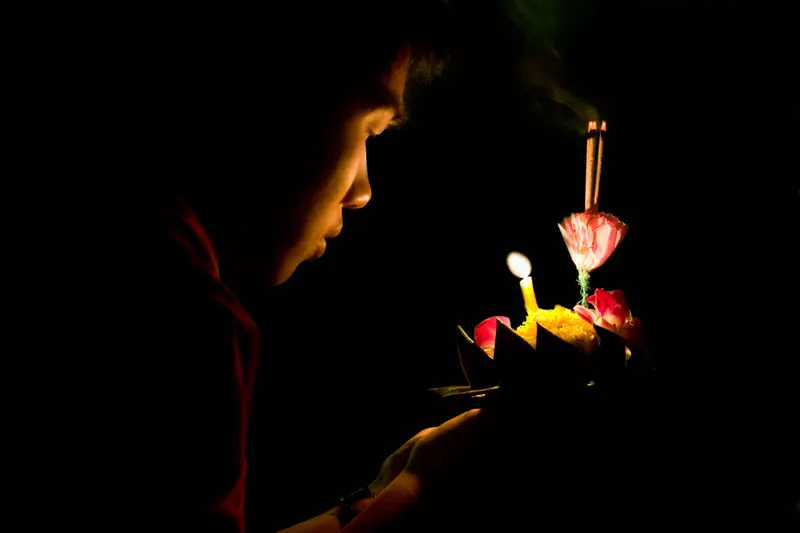
Why October is a sneaky-good time to visit
The rain scares off a lot of visitors, and that is exactly why October rewards anyone willing to plan flexibly. Temples, palaces and tours are noticeably quieter than they will be a month later, and hotel rates often sit at their lowest before the November-to-February high season pushes them up. If your dates have any give, the last weeks of October can feel like sneaking into the cool season ahead of the crowds.
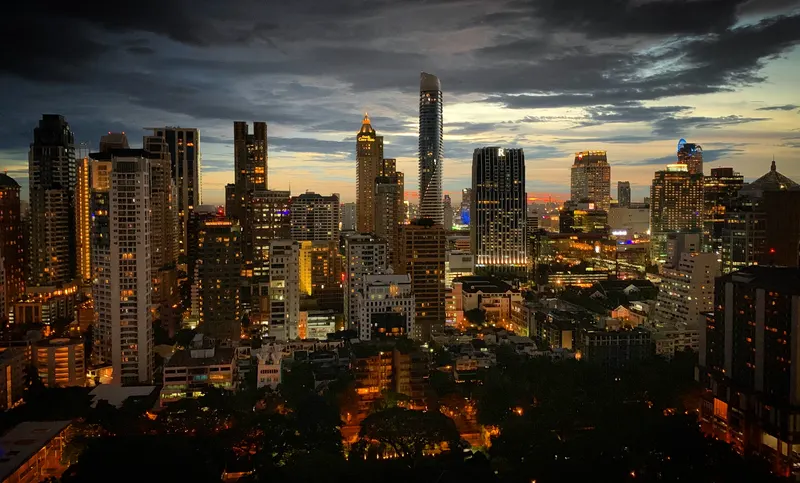
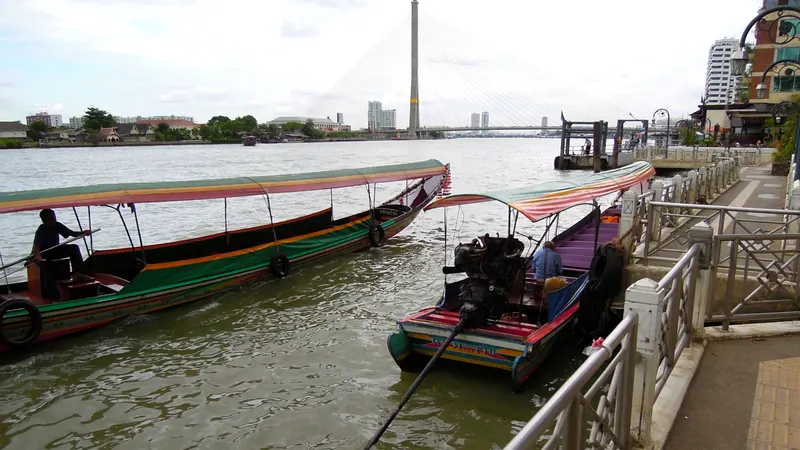
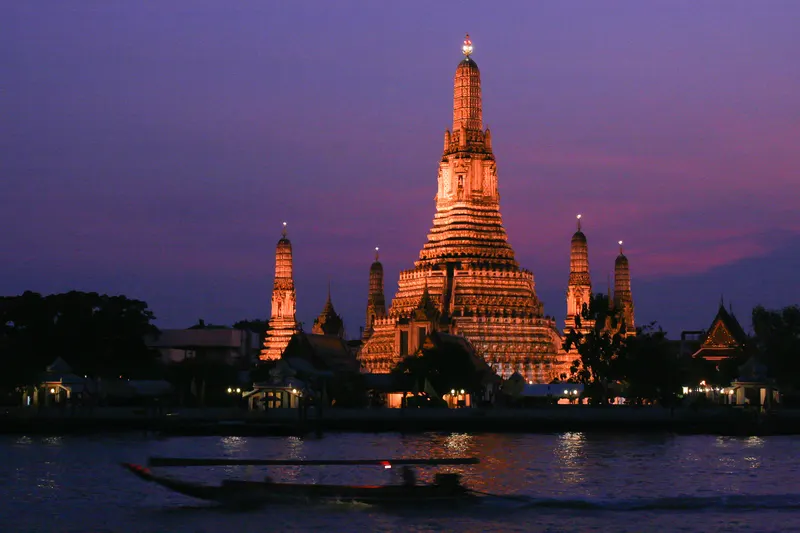
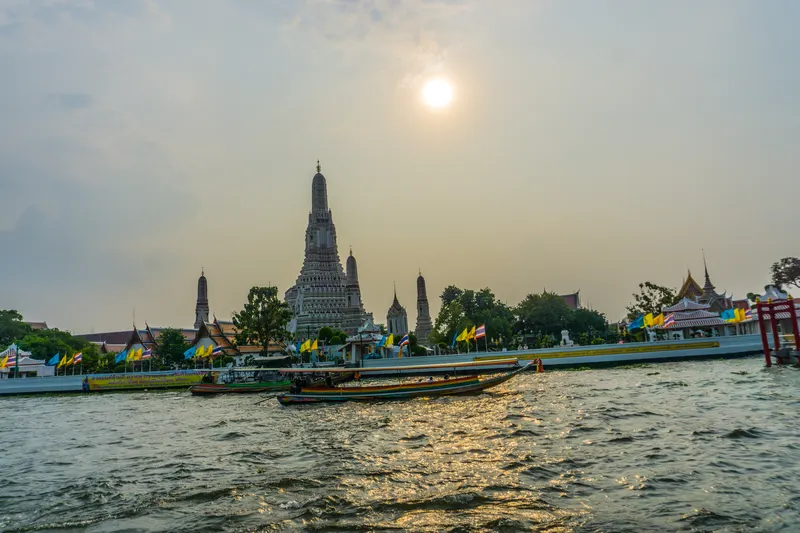
There is a real visual payoff, too. Storms wash the haze out of the sky, so the hours after a downpour often deliver the cleanest light of the year — gold on the porcelain spire of Wat Arun, sharp reflections on the Chao Phraya, and dramatic cloudscapes that beat the flat white skies of the hot season. Parks and the riverside are at their greenest and most fragrant. If you came for the romance of Bangkok rather than the checklist, October's empty courtyards and rain-cooled evenings are quietly one of the best versions of the city.
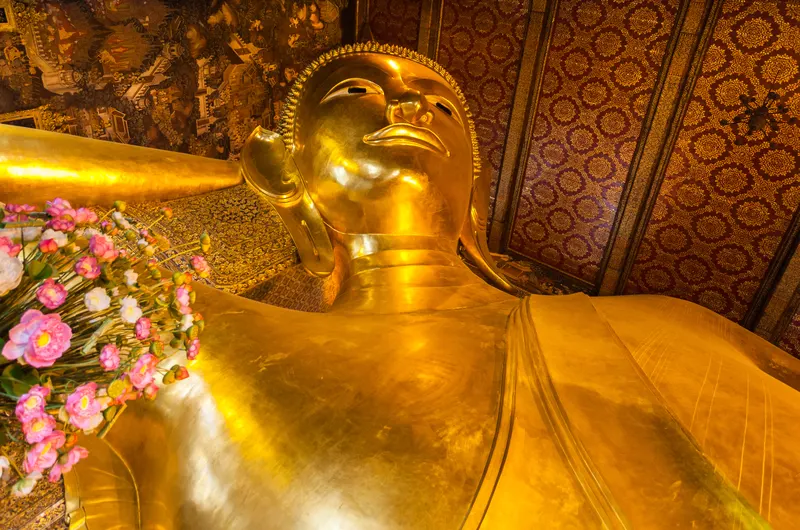
- Thinner crowds at the Grand Palace, Wat Pho and Wat Arun.
- Lower hotel and tour rates than November onward.
- Post-rain light is the year's best for sunsets and the river.
- Lush, green parks and a fresh, washed-clean feel after storms.
How to plan a rain-proof day
The single best trick for October is timing. Do your outdoor sightseeing in the morning when the sky is reliably dry, and slot an indoor option into the afternoon as a natural storm backup. Temples open early and are at their most peaceful before the heat and the crowds, so an eight or nine o'clock start does double duty.
Keep your afternoon plan flexible. If the rain holds off, you keep exploring; if it opens up, you duck into a museum, an air-conditioned mall, a covered market or a long café session and let the storm pass. Watch a live rain-radar app rather than the calendar — storms are localized, so it can be pouring on one side of the river and dry on the other. A quick check before you commit to an outdoor stop saves a lot of soggy regret, and the BTS and MRT keep you moving and dry between sights when the streets flood.
- Front-load temples and outdoor sights into the morning.
- Keep a flexible indoor backup ready for the afternoon storm window.
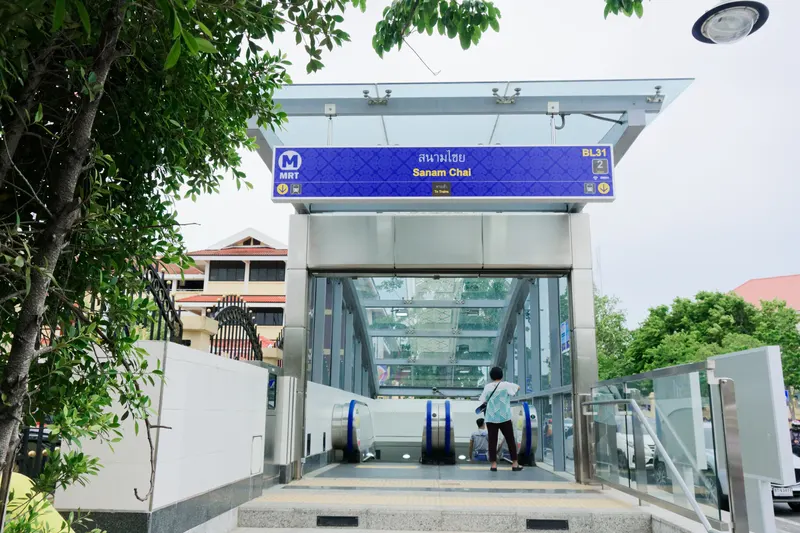
- Use the BTS Skytrain and MRT to stay dry and skip flooded streets.
- Check a live rain-radar app before leaving for any outdoor stop.

Practical notes and what to pack
Pack light, breathable clothing for the heat and humidity, plus one item you can throw over your shoulders and knees to respect temple dress codes — a light scarf or a packable long-sleeve works for both modesty and fierce air conditioning. A compact umbrella or rain shell, quick-drying footwear and a small dry bag for your phone and camera will carry you through almost any October day.
Mosquitoes are more active in the rainy season, so bring repellent, especially for evenings near parks and the river. Stick to bottled water, and give street stalls a quick once-over for freshness after heavy rain. October sits between Buddhist observances and the start of high season, so most sights keep normal hours, though a few temples may close or quiet down on Buddhist holidays — confirm anything time-sensitive locally, and build a little slack into each day. The weather, more than the calendar, sets the pace this month.
- Compact umbrella or rain shell, quick-drying shoes and a small dry bag.
- A light cover-up for temple dress codes and fierce air conditioning.
- Mosquito repellent for green-season evenings near water and parks.
- Expect mostly normal hours, with occasional Buddhist-holiday closures.
Wat Arun (Temple of Dawn)
The porcelain-studded riverside spire on the Thonburi bank — best at golden hour from a cross-river ferry or rooftop.
Map pins
Map data © OpenStreetMap contributors · Tiles © OpenFreeMap
Sources
- Thai Meteorological Department ↗
Official Thai weather forecasts and rainfall outlooks.
- Tourism Authority of Thailand — weather & seasons ↗
TAT confirms October as the tail of the rainy/green season before the cool season (2026).
- Tourism Authority of Thailand ↗
Official tourism authority for confirming the lunar-set Vegetarian Festival dates (typically early October; estimated 1–9 October 2026, varies yearly).
- TAT Newsroom — MRT Blue Line to Yaowarat ↗
TAT confirms Wat Mangkon MRT (Blue Line) on Charoen Krung Road sits in the heart of Chinatown/Yaowarat.