- Time needed
- A night scene
- Nearest
- MRT Wat Mangkon (Blue Line)
- Price
- Most stalls and shophouses are inexpensive
- Best for
- Night-time street-food grazing
Yaowarat after dark: the city's great food street
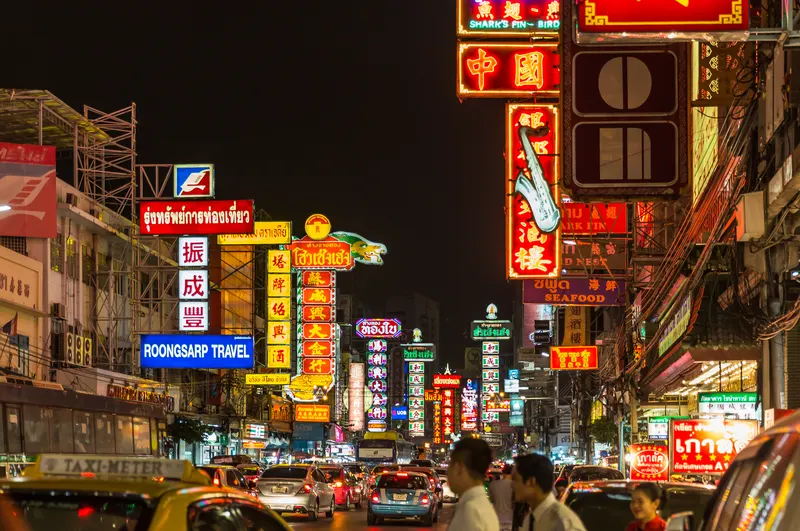
Yaowarat, Bangkok's Chinatown, is one of the most concentrated street-food experiences on earth, and it is firmly a night-time affair. By day the district is hot, dense and built for gold shops and herbal pharmacies rather than eating; come back after the sun drops and the same lanes transform into a river of neon signs, flaming woks and tables that spill onto the pavement. The main thoroughfare, Yaowarat Road, is the spine, but the real magic is in the side sois.
The right way to do it is to graze in stages. Order one dish from a stall, eat it standing or perched at a plastic table, then drift on to the next — this is how you sample seafood, noodles, braised meats and three kinds of dessert in a single evening without filling up at the first stop. Come genuinely hungry, walk slowly, and let the smoke and the crowds steer you.
It is also, quietly, one of the most atmospheric places in the city to eat in the evening — all warmth, steam and shared plates. Wear comfortable shoes, because the sidewalks are uneven and the best spots are often the most crowded, and accept that you will be shoulder to shoulder with locals and visitors alike. That crush is the point.
- Go after dark — daytime Yaowarat is for shopping, not eating.
- Graze in stages across many stalls rather than committing to one table.
- Walk Yaowarat Road and duck into the side sois, where the best stalls hide.
- Come hungry, wear comfortable shoes, and accept the crowds as part of the experience.
Cash & cards
Cash only at the stalls — bring plenty of small notes; queues form for the famous names
What to eat in Yaowarat — and where
A starting shortlist of standout, currently-operating spots, by area. Hours and menus change and the best places fill up, so check the latest and book ahead where it matters — we don't quote prices.
- 01
Nai Mong Hoi Tod
฿฿฿Yaowarat (Chinatown) · MRT Wat Mangkon
Off Charoen Krung in Chinatown, this 30-plus-year shophouse fries crispy oyster and mussel omelettes (hoi tod) with the eggs mixed through sticky-rice flour for a pancake-like crunch. Offers both the gooey (or suan) and ultra-crisp (or lua) versions.
- 02
T&K Seafood
฿฿฿Yaowarat (Chinatown) · MRT Wat Mangkon
A creaky three-storey townhouse on Soi Phadung Dao with green-clad staff barbecuing over an open kitchen and metal tables spilling onto the street. Known for tom yum, crab curry, grilled squid and handmade prawn rolls; opens evenings around 4:30pm.
- 03
Guay Jub Ouan Pochana
฿฿฿Yaowarat (Chinatown) · MRT Wat Mangkon
In front of the old Chinatown Rama theatre, this stall has served guay jub (rolled rice-noodle soup) for over 50 years in a fiercely peppery clear broth with crispy pork belly, offal, egg and fried dough. Now run by the founder's son.
- 04
Nai Ek Roll Noodle
฿฿฿Yaowarat (Chinatown) · MRT Wat Mangkon
Started as a pushcart over 50 years ago and now in a permanent shop on Yaowarat Soi 9, Nai Ek is the other Chinatown guay jub institution, with rolled rice noodles in peppery broth alongside crispy pork. A long-running MICHELIN listing.
- 05
Lim Lao Ngow
฿฿฿Yaowarat (Chinatown) · MRT Wat Mangkon
A third-generation, 60-plus-year fishball noodle institution on Phat Sai, famed for springy 'bouncing' fish balls made purely from fresh fish without flour, served with egg noodles in a clear, delicate broth.
- 06
Pa Tong Go Savoey
฿฿฿Yaowarat (Chinatown) · MRT Wat Mangkon
A 40-year-old cart on Yaowarat Road (near a 7-Eleven) frying patongko, Thai-Chinese dough sticks like crisp churros, served with green pandan custard or condensed-milk dip. Open evenings; closed Mondays.
- 07
Sweet Time (Sweettime)
฿฿฿Yaowarat (Chinatown) · MRT Wat Mangkon
A reliable Chinatown stop for traditional Chinese desserts, including bua loy nam king (glutinous rice balls in hot ginger soup) plus an array of other hot and cold sweets.
- 08
Prachak Pet Yang
฿฿฿Bang Rak (near Yaowarat) · BTS Saphan Taksin
Founded in 1909 on Charoen Krung Road, Bangkok's first paved street, this century-old Thai-Chinese institution roasts Cantonese-style duck and serves it over rice or noodles. A short ride from Chinatown.
Where to start and how to get there
The simplest entry point is the MRT Blue Line to Wat Mangkon station, which opens almost directly into the heart of the food district — a far easier arrival than fighting Chinatown's traffic by taxi. From the station you can walk down toward Yaowarat Road and pick a direction. Alternatively, arrive by river: the Chao Phraya boats stop near Ratchawong pier, and the walk up into the lanes is part of the atmosphere.
A classic loop starts near the Chinatown Gate at Odeon Circle and works west along Yaowarat Road, ducking into the gold-shop lanes and the food-packed sois as you go. There is no single correct route — the joy is wandering — but starting at one landmark and grazing toward another gives a loose structure so you do not double back over the same stalls.
Time it for a weeknight if you can. Friday through Sunday evenings draw the biggest crowds, with the longest queues at the famous stalls; a Tuesday or Wednesday is calmer and you will still find almost everything open. Either way, go hungry and leave room for dessert.
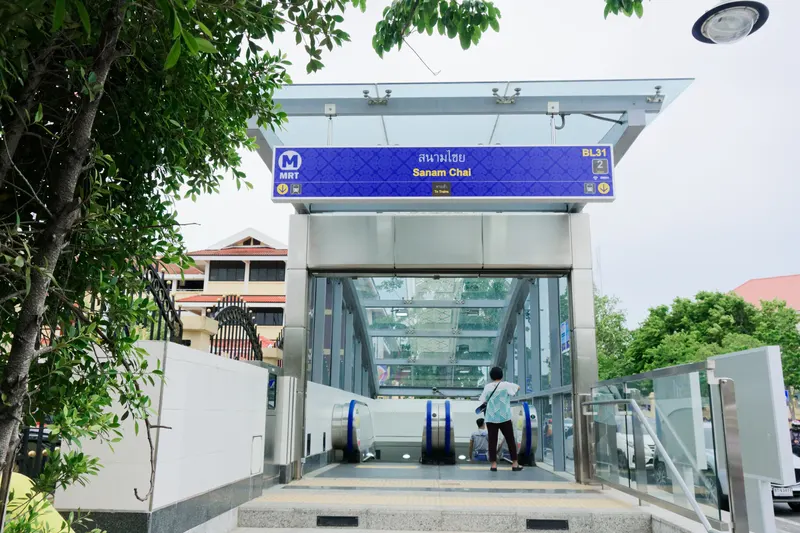
- MRT Wat Mangkon is the easiest arrival, straight into the food district.
- Or come by river to Ratchawong pier and walk up into the lanes.
- Start near the Chinatown Gate (Odeon Circle) and graze west along Yaowarat Road.
- Weeknights are calmer than the heaving Friday-to-Sunday crowds.

What to eat in Yaowarat
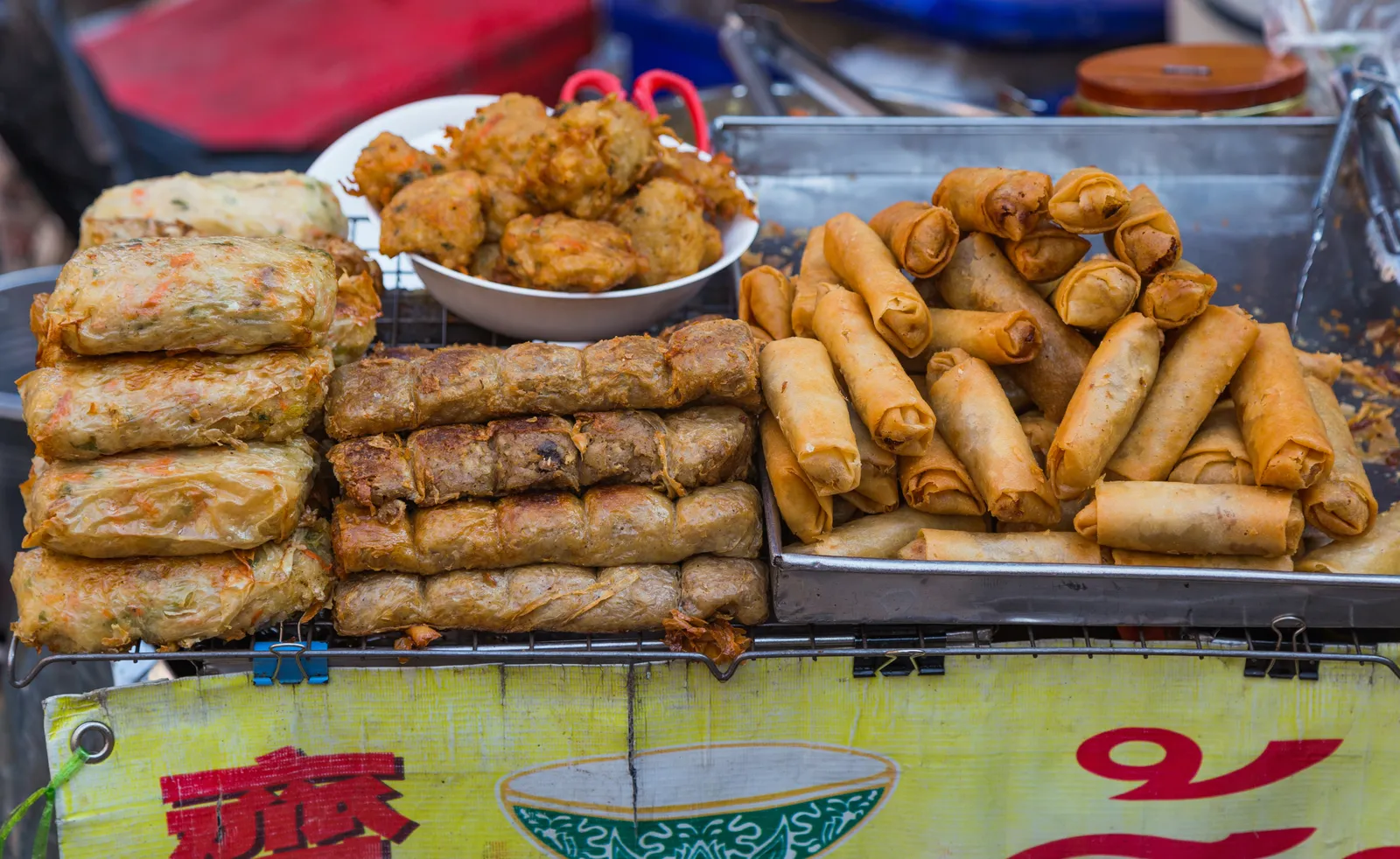
Yaowarat's signature is Thai-Chinese cooking, and the headline act is grilled and stir-fried seafood: prawns, crab, mussels and whole fish cooked over fierce heat at the big curbside operations, often eaten with a punchy seafood dip. Around them, the shophouses and stalls run deep — braised goose and duck over rice, peppery rolled rice-noodle soup (kuay jab), oyster omelets crisped at the edges, and bowls of fish-ball noodles.
Save real estate for dessert, because Chinatown's sweet stalls are among the best in the city. Look for toasted bread with condensed milk or custard, traditional Chinese-Thai sweets, fresh-pressed pomegranate and other fruit juices, bird's-nest stalls, and seasonal fruit carts. Many of the most beloved counters specialize in a single sweet they have made for generations.
Keep an eye out for the MICHELIN street-food plaques and Bib Gourmand stickers that mark some of the district's standout stalls — a useful shortlist — but trust the local queues just as much. A stall with a line of Thai diners and a cook who never stops moving is making something worth your time, plaque or not.
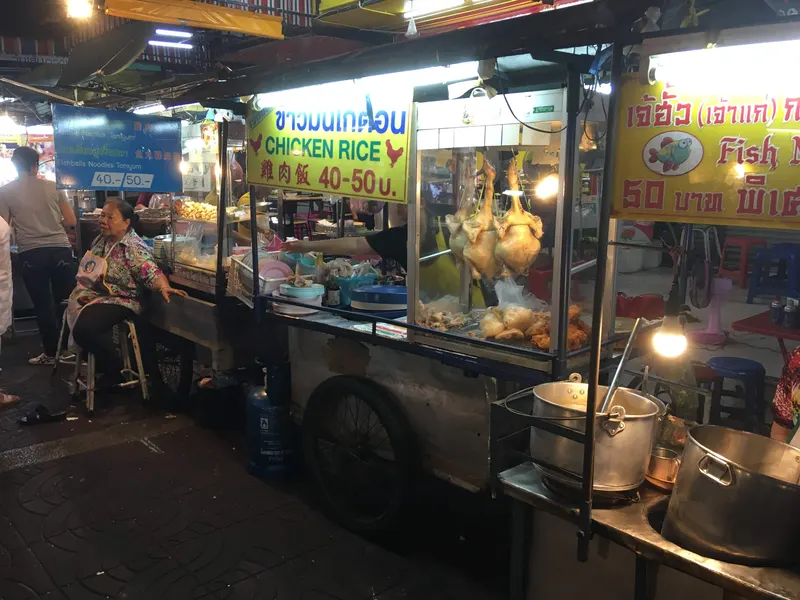
- Grilled and stir-fried seafood — prawns, crab, mussels and whole fish over high heat.
- Braised goose or duck over rice, kuay jab peppery rice-roll soup, oyster omelets, fish-ball noodles.
- Desserts: toasted custard bread, traditional Chinese-Thai sweets, fresh juices, bird's nest.
- Use the MICHELIN and Bib Gourmand signs as a shortlist, but follow the local queues too.


Crowds, queues and a calm plan
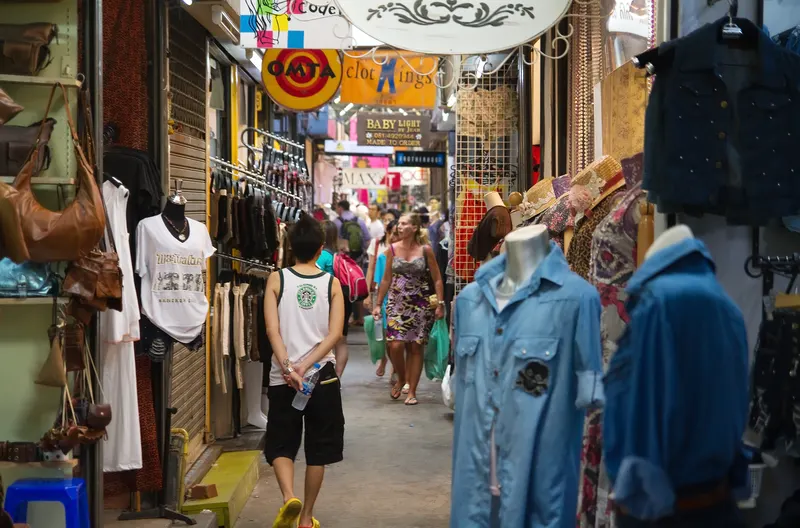
The famous stalls come with queues, and that is fine if you plan for it. Pick one or two must-try counters to actually wait in line for, and graze freely at the rest — there is so much excellent food here that a long wait at one stall is rarely worth missing three others. Go early in the evening for the headliners if you want the shortest queues, then settle into the slower drift afterward.
Be aware of off-days and the calendar. Individual stalls keep their own weekly closing day, and during the annual Jay (Vegetarian) Festival the whole district shifts toward meat-free cooking, with yellow flags marking the dishes — a fascinating time to visit, but the regular menus change. Public holidays can also thin the ranks of open stalls, so confirm before building a special trip around one name.
Above all, keep it loose. Yaowarat rewards wandering more than itineraries: carry small cash, start hungry near a station or pier, follow the densest crowds and the brightest woks, and let dessert be the last thing standing. It is one of the city's great free spectacles, and the eating is the easy part.

Sources
- MRT Bangkok (MRTA) ↗
Official metro operator — Wat Mangkon (BL29) on the Blue Line opens into the Yaowarat food district.
- Chao Phraya Express Boat ↗
Official river-boat operator — Ratchawong pier is the Chinatown landing.
- MICHELIN Bib Gourmand Thailand 2026 ↗
Official 2026 Bib Gourmand list (137 venues) — confirm which Chinatown stalls currently hold a plaque.