- Time needed
- Runs daily from roughly 06:00 until around midnight (…
- Getting there
- Tap a contactless EMV bank card (Visa/Mastercard/Unio…
- Best for
- Reaching Chinatown
What the MRT is — and how it differs from the BTS
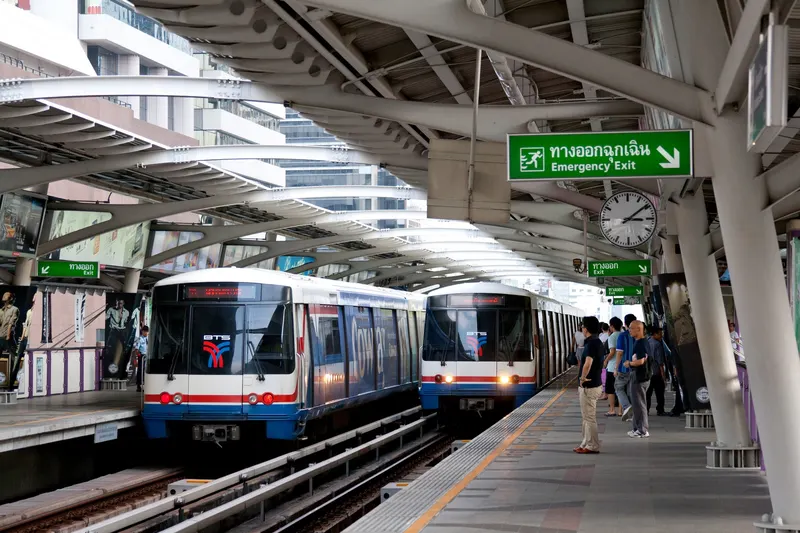
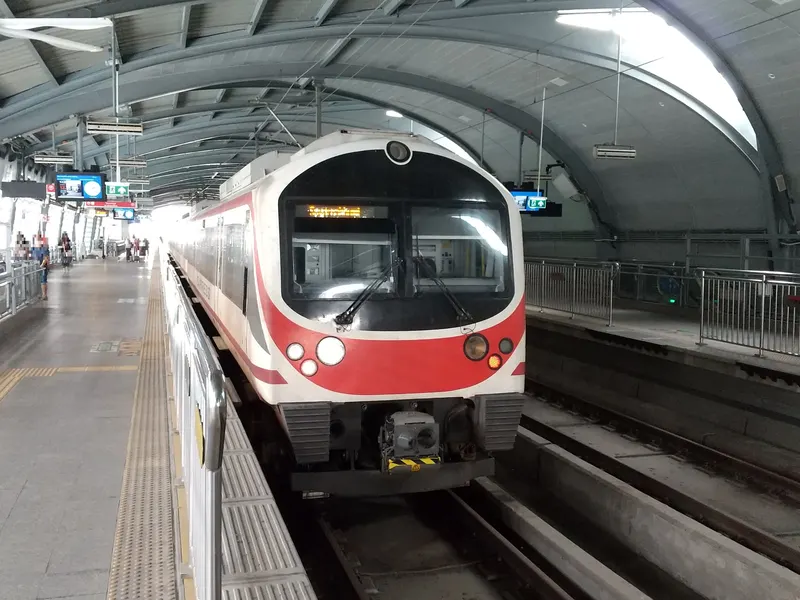
The MRT is Bangkok's underground metro, and the line that matters most to visitors is the Blue Line, which loops through the city. Where the elevated BTS Skytrain serves the modern Siam–Sukhumvit–Silom spine, the MRT reaches the older, denser parts the Skytrain never touches: Chinatown, the edge of the Old Town, the area around the former Hua Lamphong rail terminal, and the giant Chatuchak Weekend Market at its northern arc. If your day includes those, the MRT is essential.
The crucial thing to understand is that the MRT and the BTS are run by different operators and do not share a ticket. They connect at several stations, but you tap out of one system, walk a short linked passage, and tap into the other — paying a separate fare each time. So do not assume one card opens every gate in Bangkok: the BTS Rabbit Card does nothing at an MRT gate. The upside is that, like the Skytrain, the MRT is clean, frequent, air-conditioned and completely immune to the traffic above.
- MRT = underground metro; the Blue Line is the key visitor line.
- Reaches Chinatown, the Old Town's edge, Hua Lamphong and Chatuchak.
- A separate system from the BTS with separate tickets — no shared card.
- Clean, frequent, air-conditioned and traffic-proof.

Cash & cards
From 1 June 2026 the MRT Blue and Purple lines accept EMV contactless only — tap a Visa/Mastercard/UnionPay bank card or the new Mangmoom EMV card; the old MRT/MRT Plus stored-value cards and single-journey tokens were discontinued, and the BTS Rabbit Card does not work here
Tickets, contactless cards and tokens
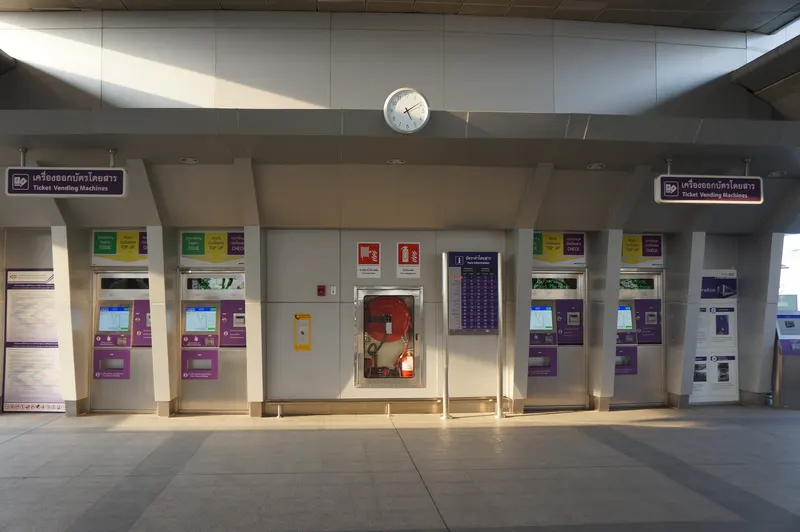
Paying on the MRT is straightforward. The simplest option for most visitors is to tap a contactless EMV bank card — a Visa or Mastercard, or a phone wallet — at the gate, where the system reads it and charges the distance-based fare. Otherwise, buy a single-journey token from the machines or the booth in the station hall, tap it in at the gate, and drop it in the slot to exit. Keep coins and small notes for the machines, which prefer them.
If you want a stored-value option, the MRT has its own card, bought and topped up at the station — but note again that it is separate from the BTS Rabbit Card and the two are not interchangeable. For a visitor doing a mix of both systems, tapping a contactless bank card at each is usually the least-hassle approach, because it sidesteps carrying two different transit cards. We keep exact fares and the current state of contactless acceptance in the facts card, since these details change.
- Easiest for visitors: tap a contactless EMV bank card at the gate.
- Single-journey tokens come from the machines or booth; keep coins handy.
- The MRT has its own stored-value card — not the same as the BTS Rabbit.
- Tapping a contactless card on both systems avoids carrying two cards.
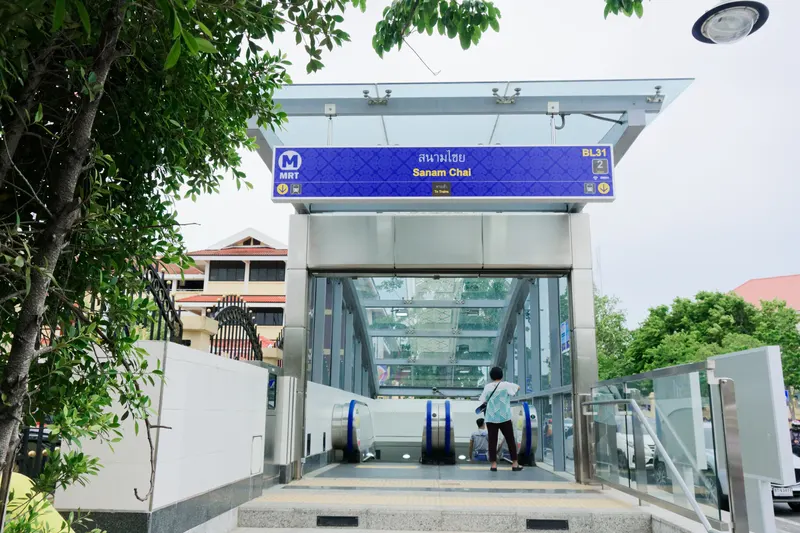
The stations that matter: Chinatown, Old Town and Chatuchak
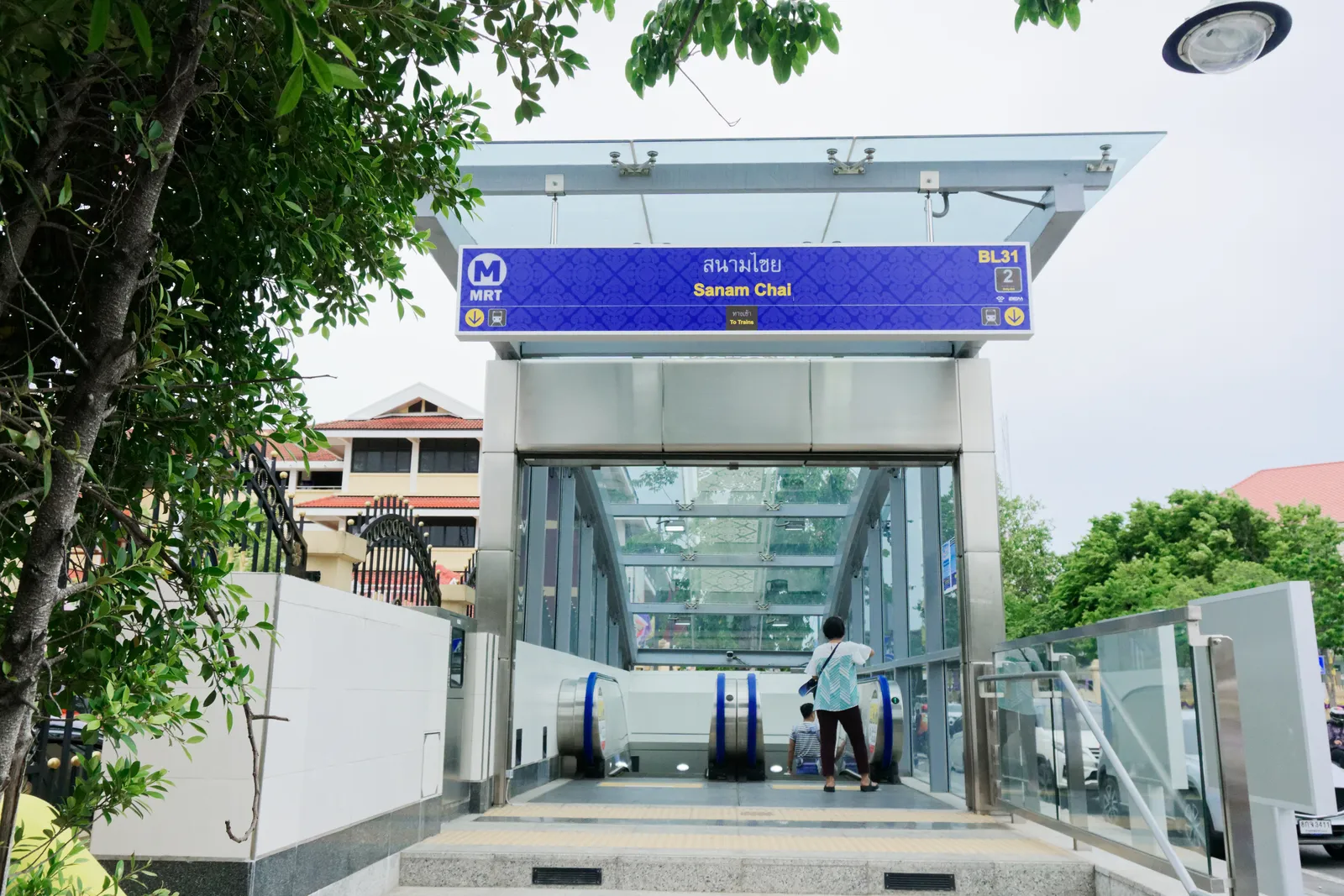
A handful of Blue Line stations unlock the parts of Bangkok the BTS cannot reach. Wat Mangkon station opens straight into the heart of Chinatown's lanes — gold shops, the night-time street-food strip and the Chinese temples — making the MRT the obvious way to arrive for an evening of eating in Yaowarat. Sam Yot and Sanam Chai reach toward the Old Town and the Rattanakosin temple quarter, putting the Grand Palace and Wat Pho within a walk or a short hop rather than a long taxi crawl.
At the northern end of the loop, the MRT delivers you to the giant Chatuchak Weekend Market, where it meets the BTS at Mo Chit so you can arrive on either system. For arrivals, the line also passes the former Hua Lamphong terminal area. Plan your day around these anchors: the MRT is how you fold Chinatown and the Old Town into an itinerary that otherwise lives on the BTS spine, and it does it without the traffic that swallows afternoons.
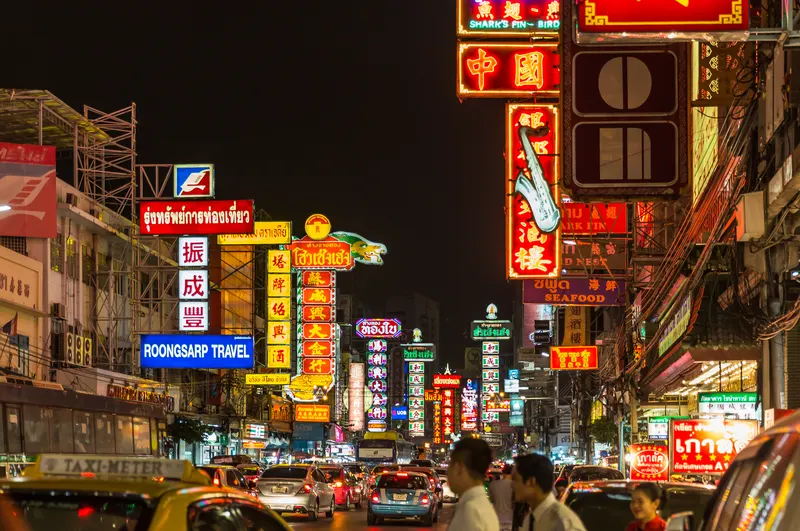
- Wat Mangkon: straight into Chinatown's food streets and temples.
- Sam Yot / Sanam Chai: toward the Old Town and the Grand Palace fringe.
- Chatuchak (north arc): the weekend market, also reached via BTS Mo Chit.
- The line passes the former Hua Lamphong terminal area.
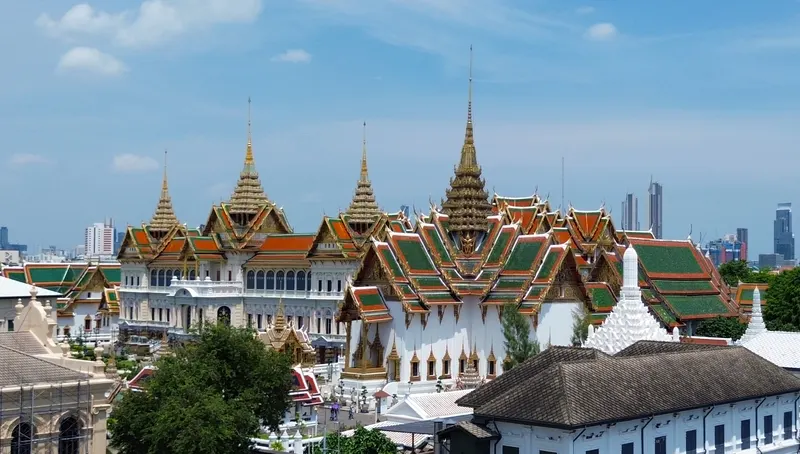
Interchanges, riding smart and when MRT wins
Learn the interchanges and you can move seamlessly between the two rail systems. Asok (BTS) connects to Sukhumvit (MRT) in the middle of the nightlife district; Sala Daeng (BTS) connects to Si Lom (MRT) for Lumphini Park; and Mo Chit (BTS) sits beside the MRT near Chatuchak. At each, you exit one operator's gates, walk a short linked passage, and pay a fresh fare into the other — so factor a couple of extra minutes and a second tap into your planning.
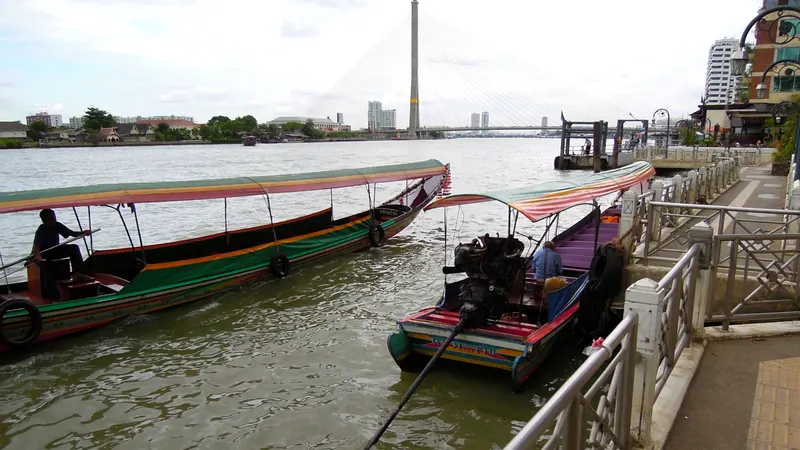
The MRT wins whenever your day reaches off the BTS spine. For Chinatown after dark, the Old Town temple fringe, or the weekend market, it is faster, cooler and far cheaper than a taxi stuck in traffic. Ride outside the morning and evening peaks for a seat, stand clear of the platform-edge doors, and remember the no-food-or-drink rule. Pair the MRT with the BTS for the modern city and the river boats for the Old Town riverfront, and you have the whole network covered.
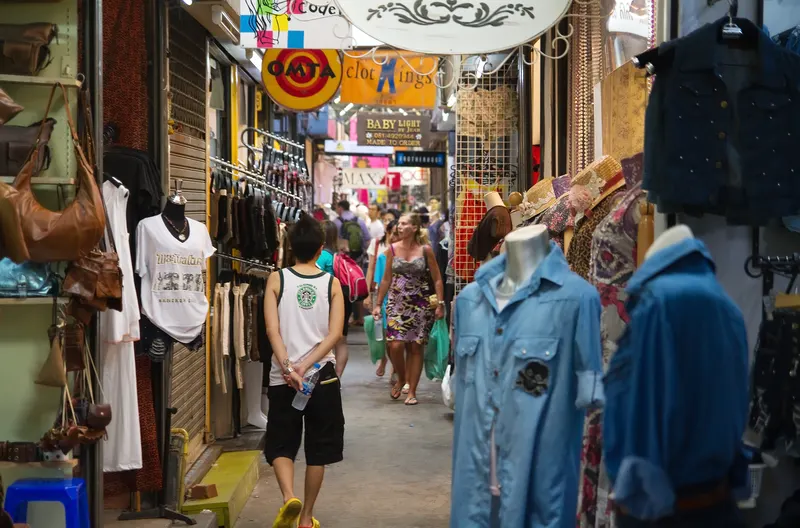
- Key interchanges: Asok ↔ Sukhumvit, Sala Daeng ↔ Si Lom, Mo Chit ↔ Chatuchak.
- Expect a separate fare and a short walk at each system-to-system hop.
- MRT wins for Chinatown, the Old Town fringe and Chatuchak.
- Ride off-peak for a seat; no food or drink on board.
Frequently asked questions
How is the MRT different from the BTS? The MRT is underground and reaches Chinatown, the Old Town's edge and Chatuchak; the BTS is elevated and serves the Siam–Sukhumvit–Silom spine. They are separate systems with separate tickets that interchange at a few stations.
Can I use a contactless card on the MRT? In general the MRT accepts contactless EMV bank cards at the gate, alongside single-journey tokens and its own stored-value card. We keep the current state of acceptance in the facts card, since it changes.
Does the Rabbit Card work on the MRT? No. The Rabbit is a BTS-only card. Use a contactless bank card, an MRT token or the MRT's own card instead.
Which MRT station is best for Chinatown? Wat Mangkon drops you straight into the Yaowarat lanes — the easiest way to arrive for street food in the evening.
Where these are
Map pins
Map data © OpenStreetMap contributors · Tiles © OpenFreeMap
Sources
- BEM EMV contactless (official) ↗
Official BEM page on tapping EMV bank cards on the Blue/Purple lines.
- MRTA EMV contactless (from 1 June 2026) ↗
Official MRTA notice ending stored-value cards and tokens for EMV.
- MRTA (Mass Rapid Transit Authority) ↗
Official rail authority for MRT line maps, fares and hours.