- Time needed
- The BTS runs roughly 06:00–24:00 and the MRT on simil…
- Getting there
- BTS and MRT cover the modern east
- Best for
- First-timers wanting to beat traffic and the heat acr…
The golden rule: trains and boats first, roads last
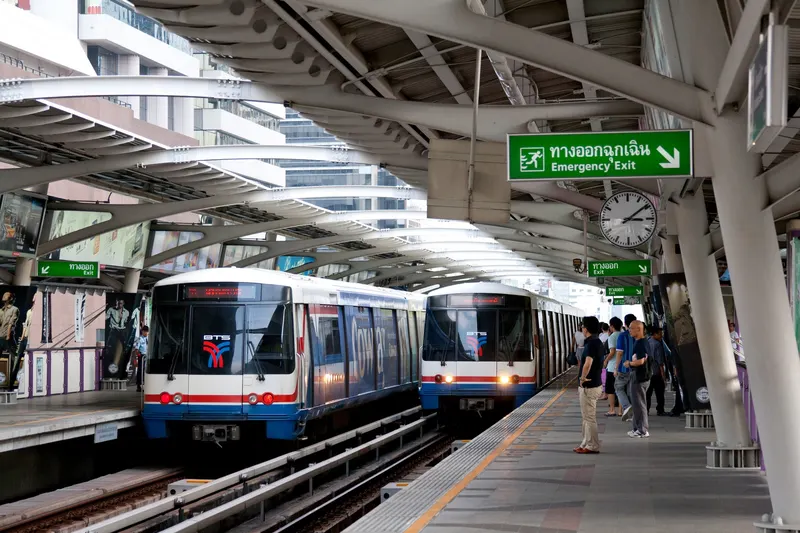
Bangkok's traffic is the single biggest threat to a good day, and the single best defence is to plan your routes around the things that ignore it. The elevated BTS Skytrain and the underground MRT are fast, clean, frequent and gloriously air-conditioned, and they cut straight over and under the gridlock that swallows taxis. The Chao Phraya River works the same way for the historic west side: a boat is both cheap transport and the prettiest sightseeing in the city. When your route lines up with a train line or the river, take it — every time.
A realistic day pairs the modes rather than picking just one. You might take the BTS to a river pier, ride an express boat up to the Old City temples, retreat into an air-conditioned mall through the worst of the midday heat, then open Grab for the tired ride back to the hotel when your feet give out. The trick is not to over-plan every leg; keep a transit card and the ride apps ready and decide as you go.
The roads still matter for the last mile, late nights and places the rails and river do not reach. But treat car travel as the exception, not the default — especially during the morning and late-afternoon rush, when even a short hop by taxi can turn into a lost half-hour.
- On a BTS or MRT corridor: take the train, full stop.
- Heading to riverside temples or Thonburi: take a Chao Phraya boat.
- Off the rail lines, after midnight, or with luggage: open Grab or Bolt.
- Last kilometre down a long soi: a motorbike taxi from the corner stand.

Watch out
Insist on the taxi meter or use an app fare; skip the cheap tuk-tuk 'tour' that detours to gem and tailor shops
The trains: BTS Skytrain and MRT subway
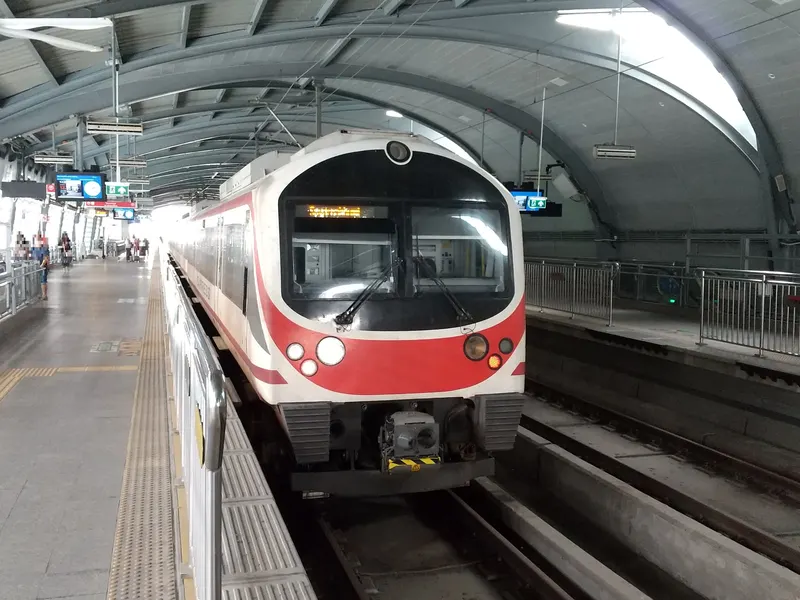
The BTS Skytrain runs on elevated tracks above the main avenues; the MRT runs underground. Together they are the backbone of getting around modern Bangkok, serving Siam, Silom, Sukhumvit, Chinatown, the Old City fringe and the weekend market. Both are clean, frequent and air-conditioned — a real relief when the pavement outside is touching the mid-thirties — and they run from early morning until around midnight.
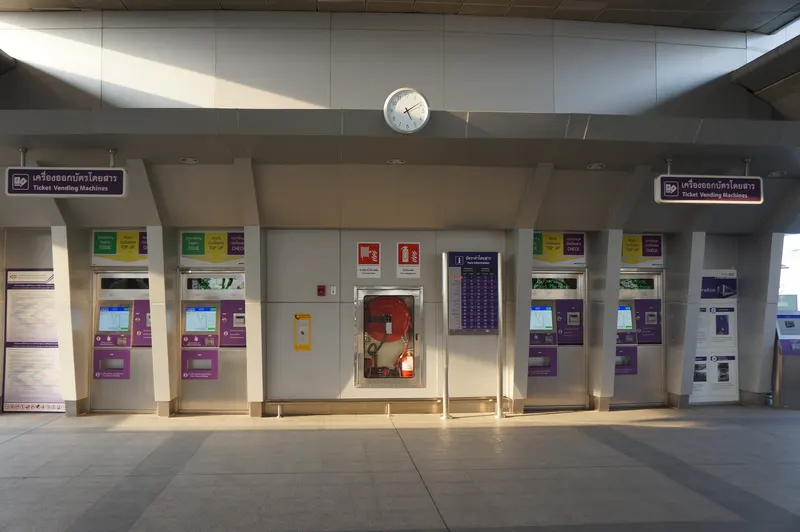
They are run by different operators with separate fares, so a stored-value card for one network does not automatically work on the other. For a few days of sightseeing you do not need to overthink it: tap or buy single tickets, carry a card for whichever line you use most, and keep coins handy for the river. Avoid the worst of the crush at rush hour (roughly the morning and late-afternoon commute) if you can, when platforms and carriages fill up.
Stations are signposted in English, with maps at every platform, so even a first-timer can navigate confidently within a ride or two. Where the train drops you a few minutes from your destination, that short walk or a quick motorbike-taxi hop is almost always faster than fighting traffic the whole way by car.
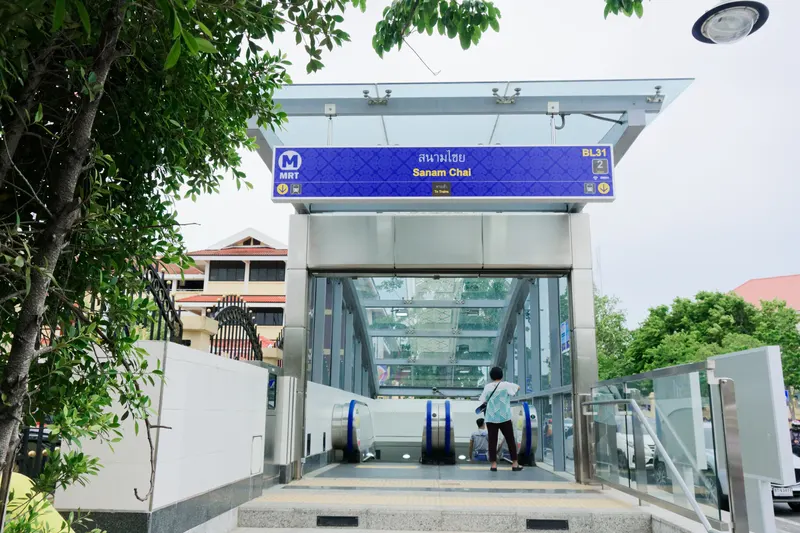
- BTS = elevated Skytrain; MRT = underground subway; both run until around midnight.
- Separate operators and tickets — a card for one line may not cover the other.
- English signage and platform maps make both easy for first-timers.
- Dodge the rush-hour crush on platforms and in carriages where you can.

The river, canals, taxis and the rest
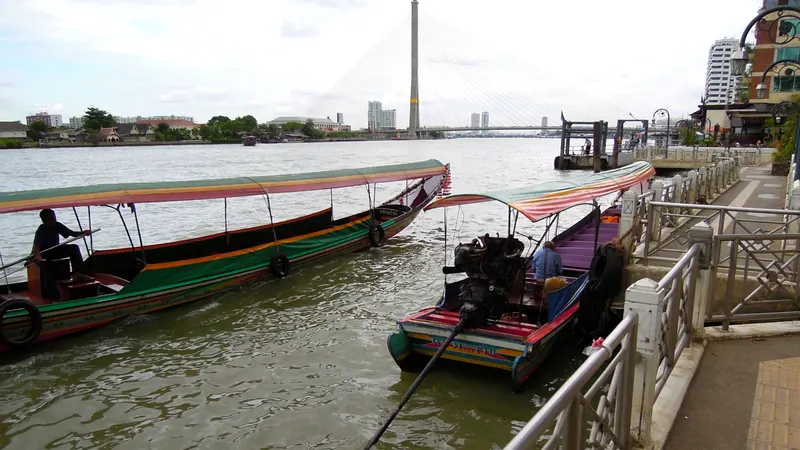
The Chao Phraya River is its own transit line. The orange-flag Chao Phraya Express Boat is a cheap local commuter ride that locks in the temples and riverside sights, while the blue-flag tourist boat hops the main piers with commentary at a higher fare. Cross-river ferries shuttle you to Wat Arun and the Thonburi bank for a few baht. Boats run mainly in daylight and thin out by early evening, so save the river for the day and switch to Grab after dark. Canal (khlong) boats also exist for crossing central Bangkok fast and cheap, though they are a more local, splash-prone experience best saved for once you have found your feet.
For door-to-door trips, ride apps are the lowest-stress option. Grab is the dominant one in Thailand, with Bolt as a frequently cheaper challenger; both show the fare before you book, so you skip the haggling. Metered taxis are still plentiful and cheap when the meter is actually running — if a driver quotes a flat fare instead, just wave them on and flag the next one. Both apps and taxis can add expressway tolls, which are worth paying to skip the worst surface traffic.
Tuk-tuks are a fun once-per-trip experience, not a transport plan: you negotiate the price up front, they are rarely cheaper than a metered taxi, and they are exposed to the heat and fumes. The genuinely useful local shortcut is the orange-vested motorbike taxi stationed at the mouth of long sois, which will zip a single, lightly-laden passenger down a side street in minutes. City buses are the cheapest option of all but slow, crowded and largely unsignposted in English, so most visitors skip them. And in the cool season, walking short, shaded stretches between sights is a pleasure rather than a chore.
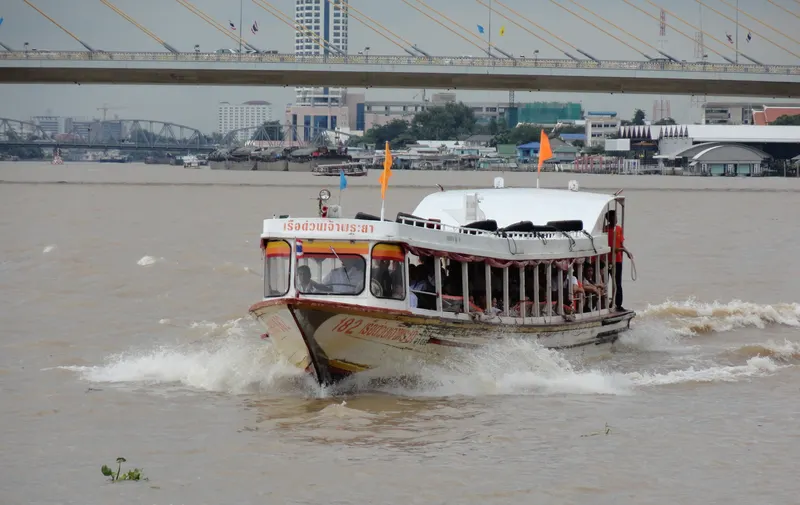
- Orange-flag express boat = cheap local; blue-flag tourist boat = pricier, commentary; cross-river ferries are pocket change.
- Grab and Bolt show the fare up front; accept the expressway toll to skip gridlock.
- Metered taxis are cheap with the meter on — refuse a flat-fare quote and take the next one.
- Motorbike taxis (orange vests) are the fast last-leg hack; tuk-tuks are a novelty.
- Buses are cheapest but slow and English-light; walk shaded stretches in the cool season.
Avoiding the traffic traps
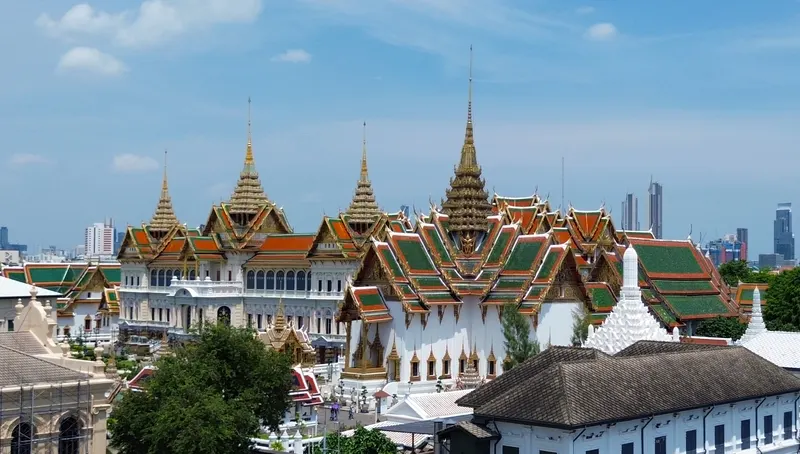
The biggest mistake first-timers make is scheduling a cross-town dash by car during the late-afternoon rush. That is precisely when the trains earn their keep and when ride-app prices surge while cars vanish. Build your day so you are not bouncing across the city — group sights by area, let the river handle the historic west and the rails handle the modern east, and avoid trying to hop between the two by taxi at peak hours.
Rain changes the calculus instantly. The moment a monsoon downpour starts in the green season, ride-app prices jump and supply drops, while the trains keep running on time and dry. Treat a sudden storm as your cue to be on a train or under a roof, not in a cab inching through flooded streets. Keep one indoor backup — a mall, a food court, a café — ready for the heat of the day or a downpour.
Finally, plan your way home before you go out. The trains stop around midnight, so a late dinner, a rooftop or a night market means a Grab back rather than a 2 a.m. negotiation with a tuk-tuk. Set the apps up with a payment card before you arrive and the whole city becomes far easier to read.

- Don't schedule a cross-town car trip during the morning or late-afternoon rush.
- When rain hits, get on a train or under a roof — cars stall and app prices spike.
- Group sights by area so you're not zig-zagging across the city.
- Pre-plan the ride home; the trains close around midnight.
Sources
- BTS Skytrain — FAQ / hours ↗
Official operator confirming BTS service hours (06:00–24:00).
- MRT Bangkok (MRTA) ↗
Official subway authority — confirm current MRT fares and hours.
- Chao Phraya Express Boat ↗
Official river-boat operator — flag colours, routes and fares.