- Time needed
- Allow a full evening
- Getting there
- The historic stadiums sit in the old royal-district a…
- Price
- Tiered seating: ringside is the priciest
- Best for
- Couples
Why a fight night is worth your evening
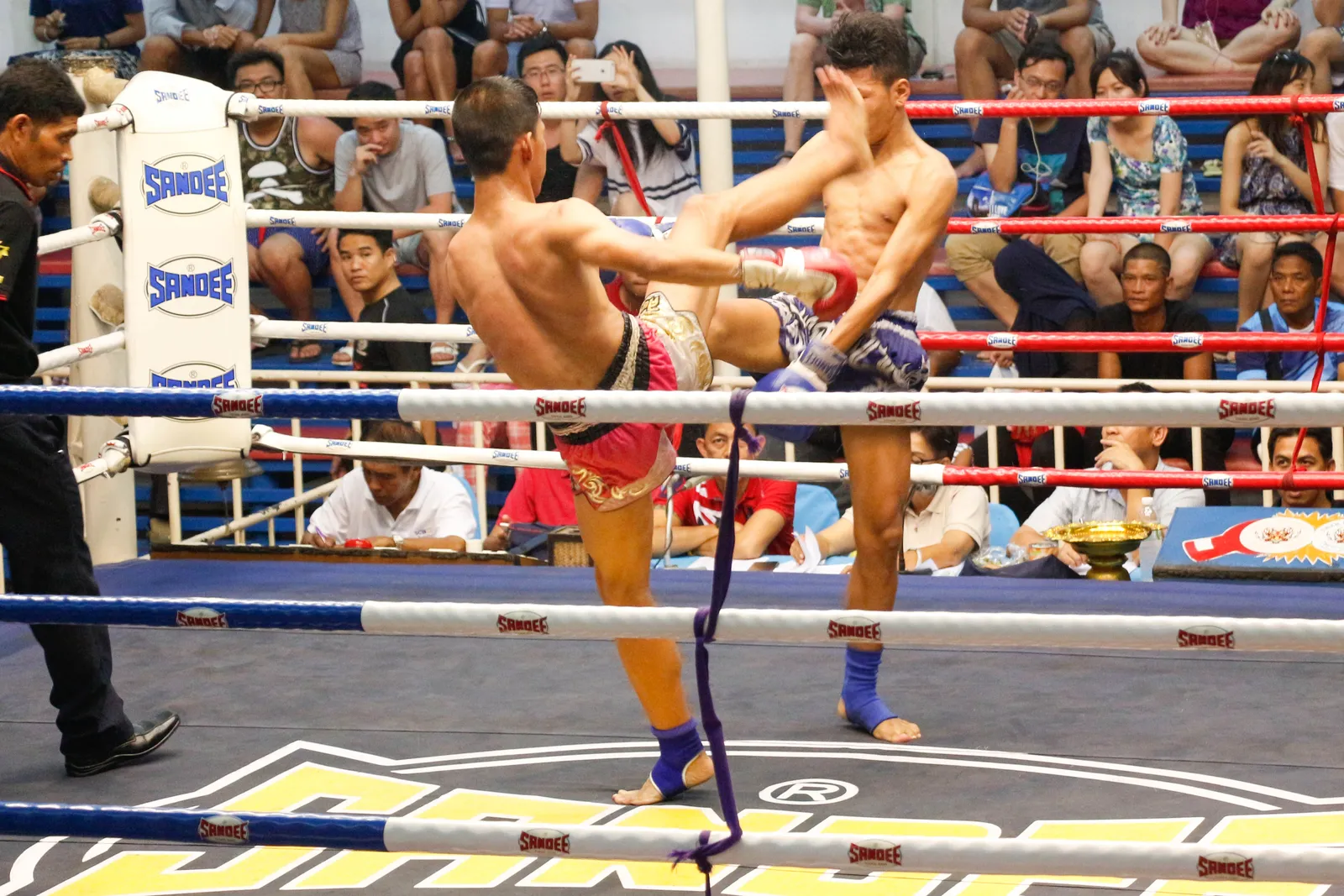
Muay Thai — the 'art of eight limbs', fought with fists, elbows, knees and shins — is Thailand's national sport, and watching a live card in Bangkok is one of the city's most genuinely memorable evenings. Unlike the temples and markets, it asks nothing of you in advance: you turn up, take a seat and let the spectacle carry you. For couples, solo travelers and anyone after something different from another rooftop dinner, it is an easy, atmospheric night out that sticks in the memory.
The fighting itself is fast, technical and often brutal, but the ritual around it is just as compelling. Each bout opens with the wai khru ram muay, a slow, graceful dance in which fighters pay respect to their teachers and the ring, performed to the wail of live sarama music — pipes, drums and cymbals that speed up as the action heats up. In the crowd, especially in the cheaper standing sections, gamblers signal frantic bets with their hands and the whole stadium leans into the final rounds.
Cards are built to build. The opening bouts often feature younger or lighter fighters, and the quality, the crowd noise and the betting frenzy all climb toward the main event late in the evening. The single biggest mistake first-timers make is leaving after a couple of slow early fights — stay for the headline bouts, when the atmosphere is at its peak.
- Eight-limb striking: fists, elbows, knees and shins, fast and technical.
- The wai khru ritual dance and live sarama music open every bout.
- The crowd — and the betting — gets louder as the card climbs to the main event.
- No prep needed: a great first 'something different' for almost anyone.
Book ahead
Buy tickets through the official stadium box office or website rather than street touts; book ahead for marquee cards and ringside seats
Which stadium: Rajadamnern, Lumpinee or a show
Two historic stadiums anchor Bangkok's Muay Thai scene. Rajadamnern, near the old royal Ratchadamnoen district, is the original purpose-built boxing stadium and trades on heritage and a polished, tourist-friendly experience. The Lumpinee name is the sport's other legendary institution, long run by the army, whose modern home now sits further out of the center. Both run regular fight nights with serious, ranked fighters, and either delivers the real thing rather than a watered-down version.
Alongside the historic venues, several purpose-built tourist shows stage entertainment-focused cards with English commentary, theatrical staging and sometimes dinner packages. These are slicker and easier for a first-timer to navigate, and they can be a good fit if you want a guaranteed comfortable seat and a gentler introduction. Purists will steer you to the traditional stadiums for the authentic crowd and betting atmosphere; choose by how raw or how packaged you want the night to feel.
Seating at the traditional stadiums is tiered. Ringside puts you close to the action with the most electric atmosphere and the highest price; the second tier is a solid middle ground; and the cheaper standing or upper sections are where the gamblers gather and the energy is loudest, if rowdier. Tourist tickets are typically priced above what locals pay, which is the norm — decide your tier by budget, and remember the view of the whole spectacle is good from almost anywhere.

- Rajadamnern: the historic, heritage stadium near the old royal district.
- Lumpinee: the sport's other legendary name, in a modern home further out.
- Tourist shows: slicker, English-commentated, often with dinner packages — easier for first-timers.
- Seating tiers: ringside (priciest, electric), second class (middle), standing/upper (cheapest, rowdiest).
Tickets, etiquette and family caveats
Buy your tickets through the stadium's official box office or website, or a reputable tour operator, rather than from the touts who cluster outside — street sellers overcharge, oversell and sometimes sell for the wrong night. For a marquee card or a ringside seat, book a few days ahead; for an ordinary fight night, you can usually walk up, but arriving early secures a better seat and lets you watch the wai khru on the first bouts. Check the schedule before you commit, as which stadium runs on which night varies through the week.
Etiquette is relaxed but worth knowing. Dress is casual; there is no strict code as at the temples. It is fine to cheer, but do not climb into or lean on the ring apron, do not touch the fighters, and keep a respectful quiet during the wai khru ritual itself. The betting in the standing sections is a spectacle in its own right — you can simply watch it — and bringing small cash for drinks and snacks inside is sensible, as card payment is not guaranteed.
On bringing children: a Muay Thai night is a hit with teenagers, who tend to find it genuinely thrilling, and it makes a strong addition to a family trip with older kids. For very young children, weigh up the late finish, the noise, the crowd and the fact that the fighting can be bloody — many families enjoy it, but it is not a gentle, early-evening outing. If in doubt, a tourist-style show with assigned seating and an earlier, shorter card is the easier call.
- Buy from the official box office, website or a reputable operator — not the touts outside.
- No dress code; cheer freely but keep quiet during the wai khru and never touch the ring or fighters.
- Carry small cash for drinks and snacks; card payment inside is not guaranteed.
- Great for teens and sports fans; weigh the noise, late finish and intensity for very young kids.

Sources
- Rajadamnern Stadium tickets ↗
Official box office: seating tiers, prices and the nightly fight schedule.
- MuayTix (Rajadamnern) ↗
Official online ticketing for Rajadamnern fight nights.
- Lumpinee Boxing Stadium ↗
Official stadium site for ONE Lumpinee Friday cards and tickets.
- Tourism Authority of Thailand ↗
Official background on Muay Thai and Bangkok's stadiums.