What Bangkok is actually like to move through
Bangkok is a flat city, which helps, but the surfaces are the challenge. Footpaths are often a patchwork of cracked concrete, sudden curbs the height of a step, and missing slabs, all shared with parked motorbikes, vendor carts and food stalls. For wheelchair users, anyone pushing a stroller, or travelers who simply tire quickly, the difficulty is rarely the distance — it is the constant small obstacles and the heat that wear you down.
The good news is that the modern, air-conditioned infrastructure — the trains, the big malls, the newer hotels and the major royal temples — is largely flat and well surfaced. The winning strategy is to chain those together and treat the gaps between them as the genuinely hard part. Go slowly, build in long sit-down breaks, lean on taxis for the rough legs, and accept that you will see fewer sights per day than a fast walker would. That trade is not a compromise here; planned around fewer, calmer stops, it is usually the better trip.
Heat compounds everything. Through the hot season (roughly March to May) and the rainy months (around June to October), humidity drains energy fast and sudden downpours flood low footpaths within minutes, turning an already awkward curb into a small river. The cool season (roughly November to February) is by far the kindest window for longer outings on foot or wheels.
- Expect curbs without dropped kerbs; cross at signalized junctions or look for footbridges with lifts.
- Carry water and plan a shaded or air-conditioned stop every 45 to 60 minutes.
- Mornings are quietest, coolest and least crowded — aim to be out early.
- A metered taxi or Grab is often easier and kinder than a long walk over broken pavement.

Watch out
Drivers and touts sometimes claim a station 'has no lift' or a temple 'is closed' to steer you into an overpriced ride or shop — check the official transit and attraction sites, not a stranger on the street
Trains: MRT first, BTS with a plan
The MRT subway is your most dependable option. Stations are designed with lifts from street level down to the platforms, the platforms sit level with the trains, and the corridors are wide and air-conditioned. If you are choosing where to base yourself or how to cross town step-free, default to the MRT — it is the backbone of an accessible Bangkok trip.
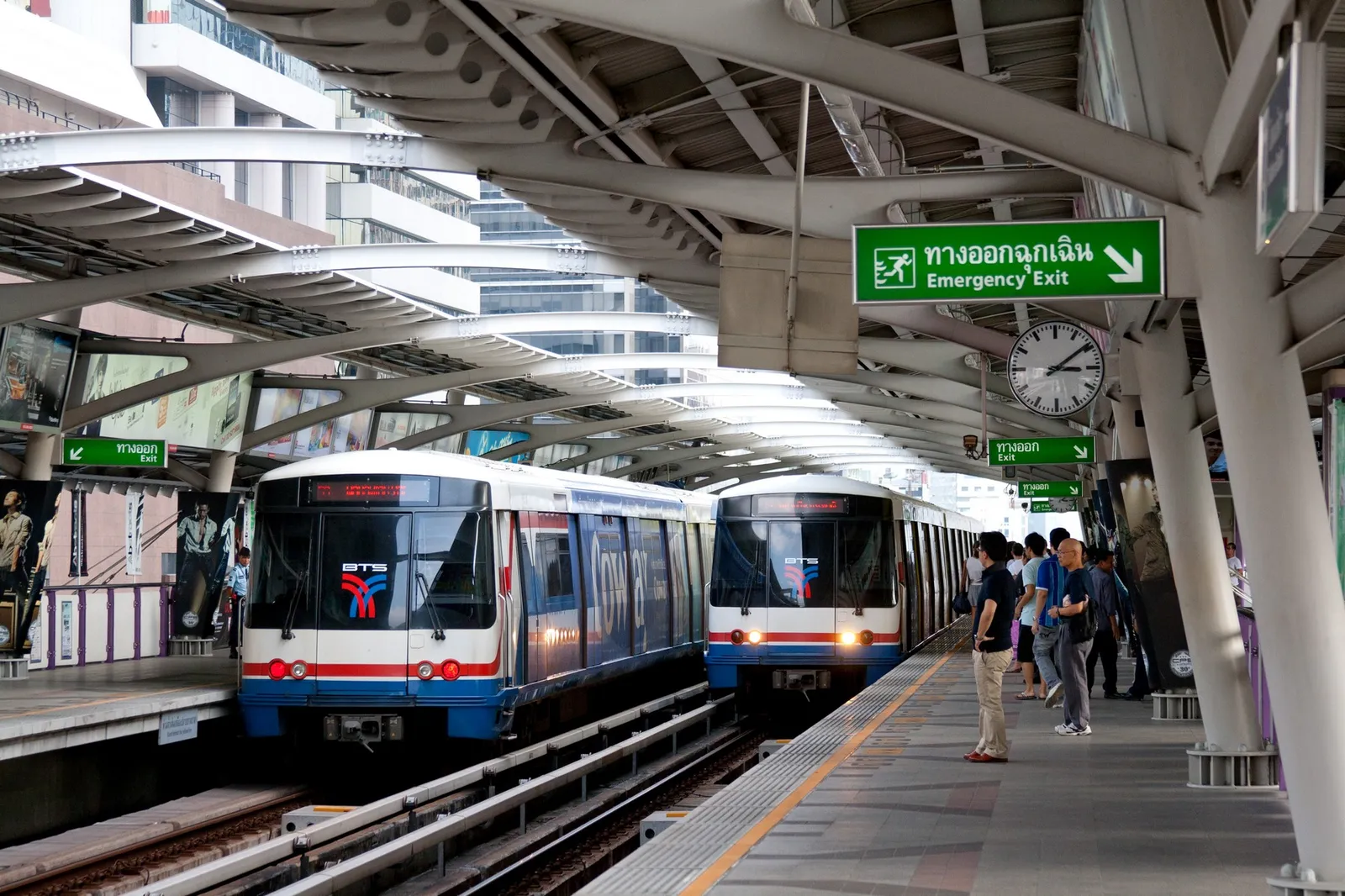
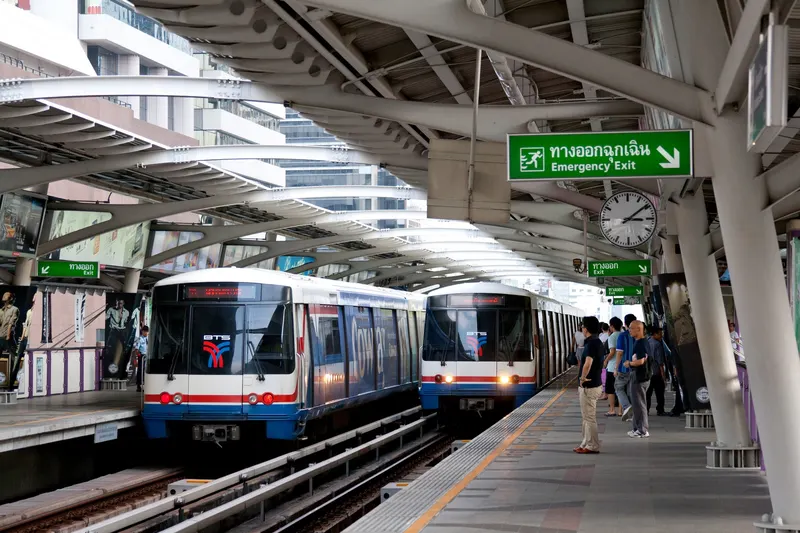
The BTS Skytrain is fast and gives you the elevated city views, but it is uneven on access. Newer and rebuilt stations have lifts; plenty of older ones still offer only long staircases and escalators, which do not help a wheelchair and are awkward with a stroller. Before you rely on any BTS trip, confirm that both your boarding and your exit station have a working lift — interchange stations are the most likely to. Escalators are sometimes set to run one direction only, so do not assume you can ride one up on the way back.
Use a stored-value transit card so you are not fumbling at the gates, and look for the wide accessible gate near the staffed booth rather than the standard turnstiles. Station staff are generally willing to help; it is normal to ask them to point you to the lift or the accessible gate. Avoid the morning and evening rush, when platforms and carriages are crushed and a chair or stroller has no room.
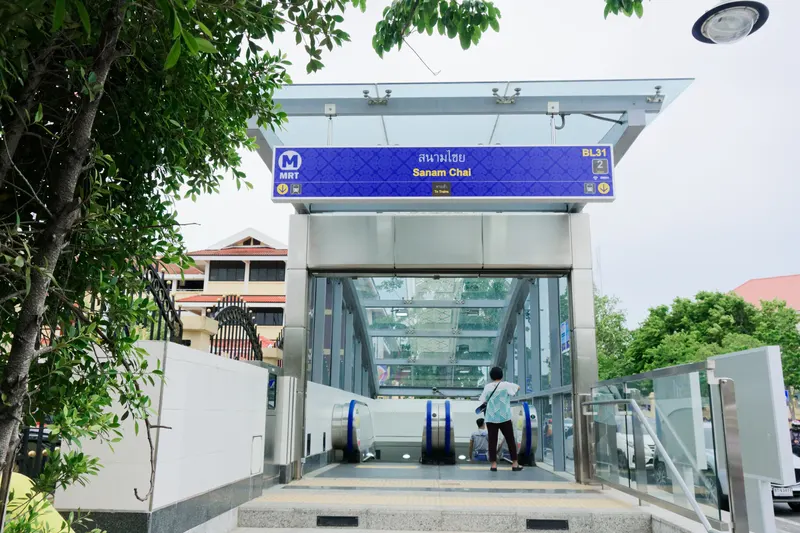
- MRT: lifts at stations, level boarding — the safest bet for step-free travel.
- BTS: confirm lifts at both ends before committing; interchanges are most likely to have them.
- Avoid the morning and evening peaks when platforms and trains are packed.
- Ask staff for the accessible gate beside the booth rather than the turnstiles.
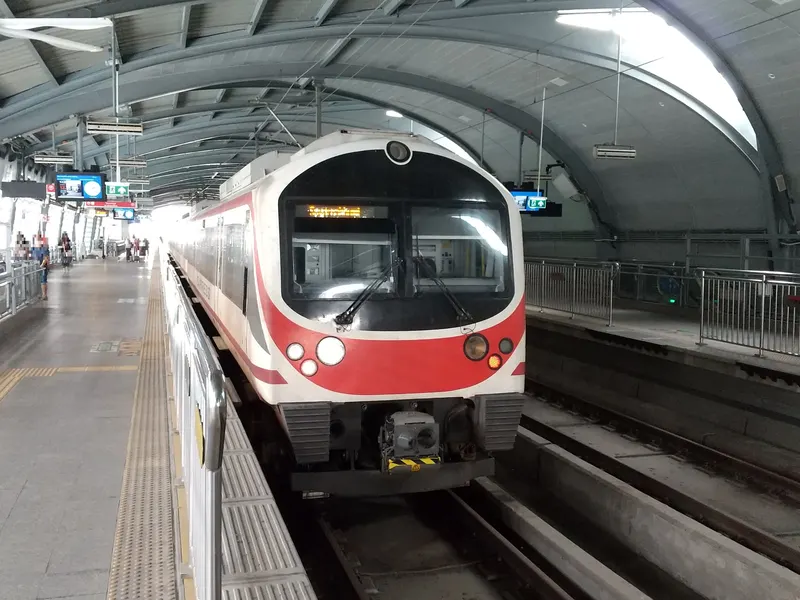
Taxis, Grab and the rough legs
For any journey that would otherwise mean a long slog over broken pavement, lean on metered taxis or the Grab app. Fares are low by Western standards and the door-to-door comfort is worth every baht when the alternative is fighting curbs in the heat. Insist on the meter in a street taxi, or book through Grab so the fare is fixed in the app and there is no haggling at the kerb.
Grab also lets you message the driver before pickup, which is the moment to flag a folding wheelchair, a stroller, or that you will need a little help and a minute to transfer. A folding chair travels far more easily in a standard sedan than a rigid frame; if you need a vehicle that takes a chair without folding, a larger Grab car or a pre-booked accessible-transfer service is the more realistic route — Bangkok does not yet have a widespread fleet of wheelchair-accessible taxis, so plan that leg in advance rather than hailing on the day.
Avoid tuk-tuks for accessibility: they sit low, require a real step up, have no support to grip, and offer no protection from heat or fumes. Treat them as a one-time novelty at most, never as a way to cross the city.
- Use Grab to message the driver about a chair, stroller or boarding help before pickup.
- Insist on the meter in street taxis, or fix the fare in the app.
- A folding chair fits a standard sedan; for a rigid chair, pre-book a larger car or accessible transfer.
- Skip tuk-tuks — low, step-up entry, nothing to hold and fully exposed to the heat.

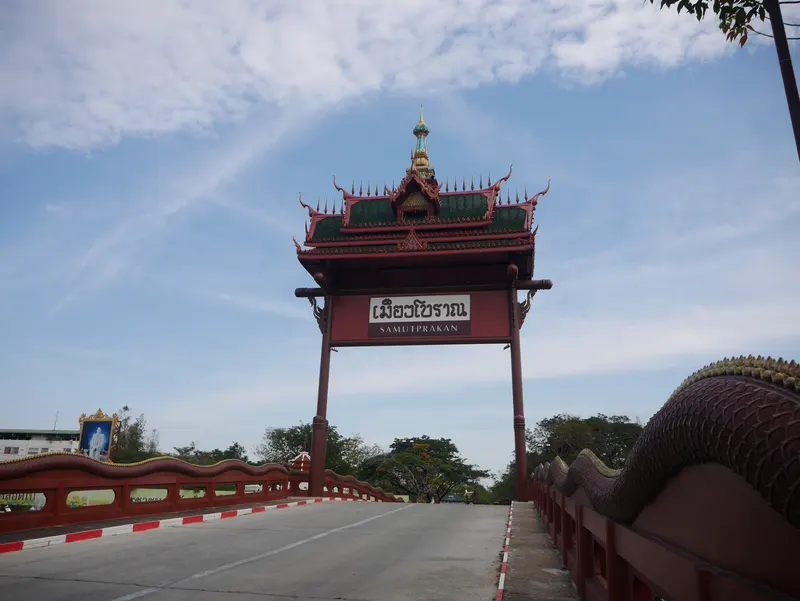
Boats, temples and lower-effort sights
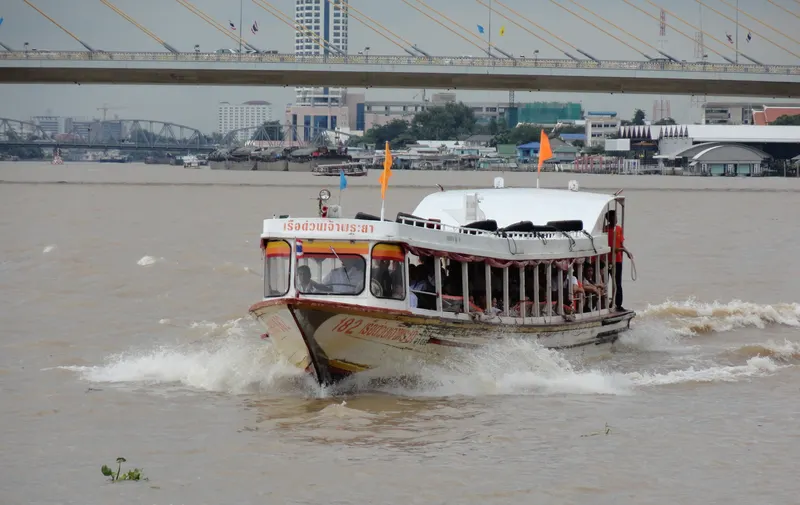
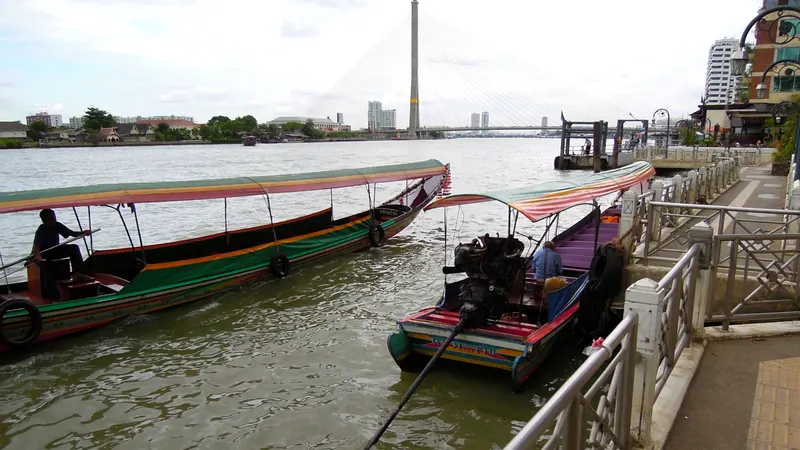
The Chao Phraya River is one of Bangkok's pleasures, and the boats are more doable than they look — but they are not step-free. The tourist boat and the orange-flag commuter boats involve a short gangway and a step on and off, and the deck shifts as the boat settles against the pier. The crew is used to helping people board: go to the front, wait for the boat to steady, and accept a hand. Sathorn (Central) Pier connects to BTS Saphan Taksin, one of the easier river-to-train links. If a step onto a rocking boat is not realistic for you, you can still enjoy the river from the flat, lift-served riverside malls.
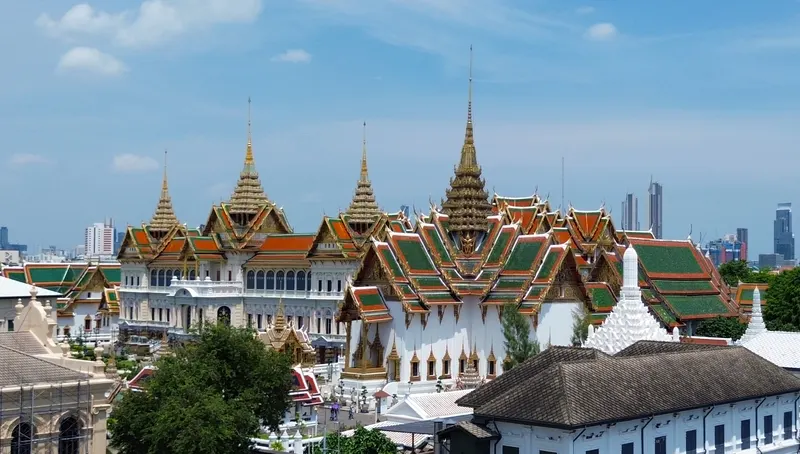
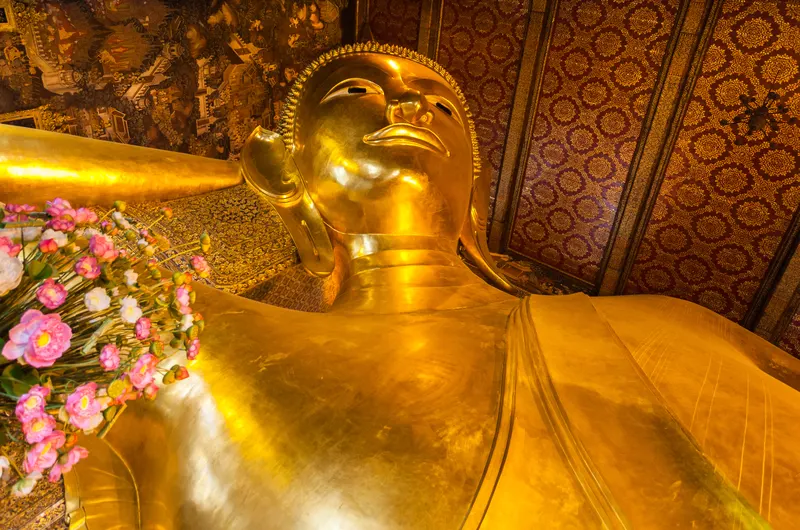
For temples, the big royal sites are flatter and far better surfaced than the back-alley neighborhood wats. Wat Pho and the Grand Palace have broad paved courtyards you can roll across, though raised door thresholds at the building entrances and stair-heavy halls still need care, and you remove your shoes to go inside — worth factoring in if standing or transferring is hard. Many travelers find that the calm, the gardens and the open courtyards are reward enough without entering every hall.
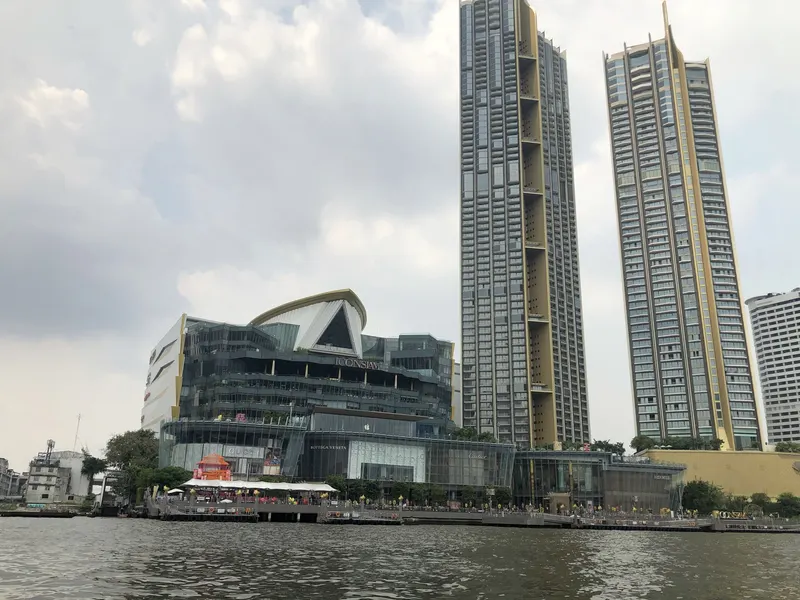
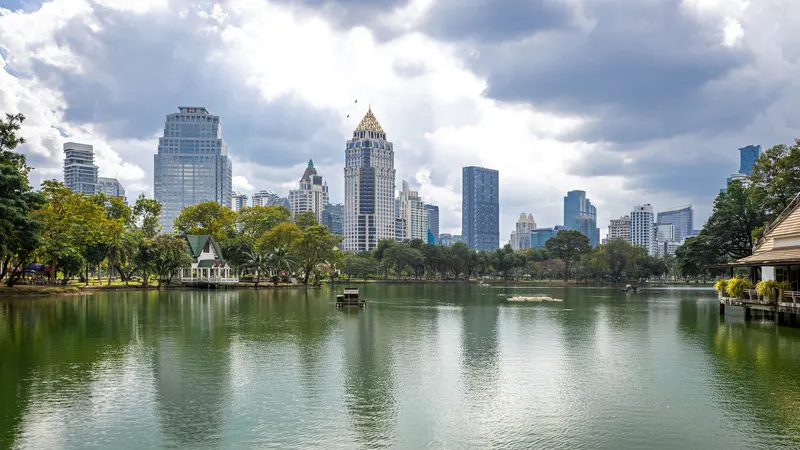
When the heat or rain wins, the riverside malls make a comfortable, cool anchor with flat floors and lifts throughout, and air-conditioned spaces like the big parks' shaded morning paths, central food courts and museums let you keep the day going without the curbs. Build each day around one anchor sight and one nearby flat, cool fallback, and the city opens up at your pace.
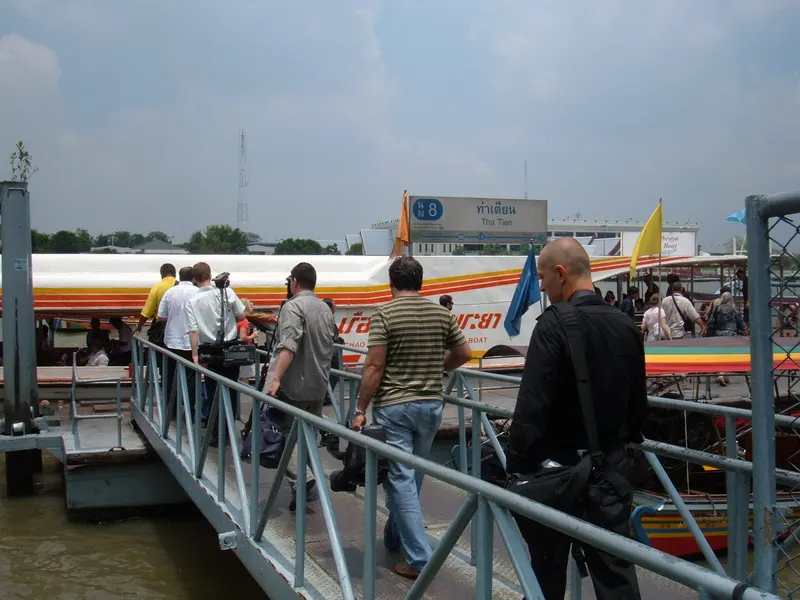
- Board boats at the front, wait for staff and let them steady the gangway.
- Sathorn Pier links to BTS Saphan Taksin for a smoother river-to-train hop.
- Royal temples are flatter than small wats; expect raised door thresholds and shoes-off halls.
- Riverside malls and food courts give you atmosphere with flat floors and lifts.
Where to stay and how to plan a lower-effort day
Where you sleep does more for an accessible trip than any single attraction. Pick a hotel with a genuine, working elevator — confirm it directly, since some budget places have stairs only — within a couple of minutes of a lift-served station, and you have removed most of the daily friction before you leave your room. Ask the property specifically about step-free entry, lift access to your floor, bathroom grab rails and roll-in showers; star ratings do not tell you any of this, so a direct message before booking is the only reliable check.
From a good base, plan one outing in the cool morning and retreat to air conditioning through the punishing midday hours. Give yourself permission to be slow: Bangkok packs enough into a single riverside afternoon or one good market that you never need to race across the city. A trip built around fewer, calmer, better-sequenced stops is the comfortable way to see it.
If you want help shaping that around the heat and the rain, our by-the-numbers itineraries and the season guide do the heavy lifting, and the riverside-hotel and accessible-hotel guides narrow the search to bases that suit a lower-effort trip.
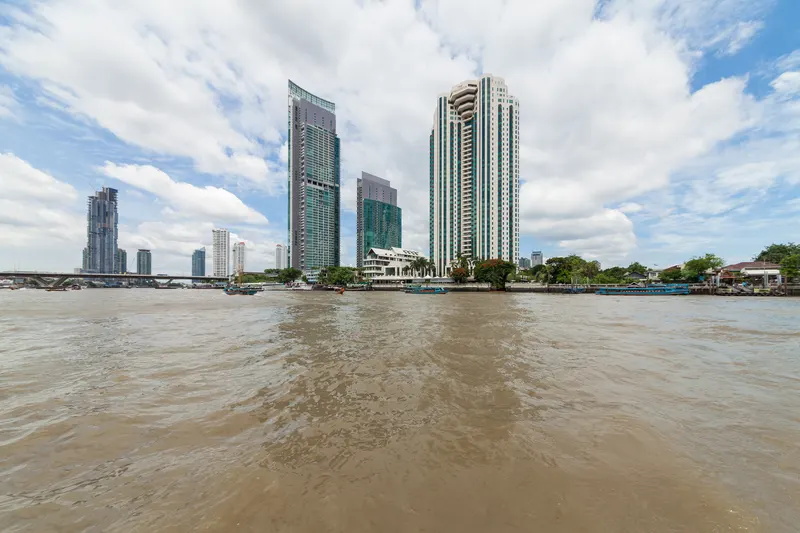
- Confirm a working lift and step-free entry directly with the hotel, not via star rating.
- Base beside a lift-served MRT or interchange BTS station.
- One anchor sight per cool morning, with a flat air-conditioned fallback nearby.
- Rest through the midday heat and come back out when the light softens.
 Accessible hotels
Bases with lifts, step-free entry and accessible bathrooms.
 Riverside hotels
Flat, lift-served bases near piers and the riverside malls.
 Where to stay
Pick the right area before the hotel for the least daily effort.
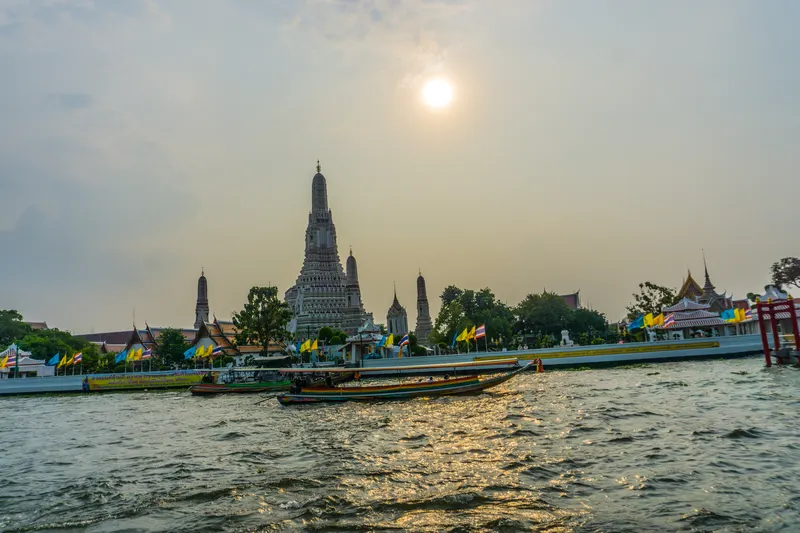 One-day route
A heat-smart single day you can pace down to your own speed.
Accessible Bangkok: common questions
A few quick answers to the questions travelers ask most before they arrive.
- Is the MRT or the BTS more accessible? The MRT — lifts at stations and level boarding make it the more reliably step-free network. On the BTS, confirm a working lift at both your stations first.
- Are wheelchair-accessible taxis common? Not widely. For a folding chair, a standard taxi or Grab works; for a rigid chair or a vehicle you do not transfer out of, pre-book a larger car or an accessible-transfer service rather than hailing on the day.
- Can wheelchair users visit the major temples? The big royal temples have broad paved courtyards you can roll across; expect raised thresholds and shoes-off halls, so you may enjoy the courtyards and gardens more than every interior.
- What is the hardest part of getting around? The sidewalks — uneven slabs, high curbs without ramps, and parked motorbikes — plus the heat. Chain air-conditioned, flat spaces and use taxis for the rough legs.
- When is the easiest time of year to visit? The cool season (roughly November to February), when lower heat and humidity make longer outings far more comfortable.
Sources
- MRTA (Bangkok MRT) ↗
Official Mass Rapid Transit Authority site for the subway network and station facilities — check current lift and access details.
- BTS Skytrain (official) ↗
Confirm the BTS Saphan Taksin link to Sathorn Pier and current station facilities.
- Chao Phraya Express Boat (official) ↗
Official commuter-boat operator for routes, piers and current schedules — confirm pier access and any closures before you go.