
- Getting there
- Base above a lift-served station
- Price
- Accessible rooms cluster in international 4–5 star ch…
- Best for
- Wheelchair users
How to choose an accessible base in Bangkok
In Bangkok the neighborhood you sleep in matters more than the hotel brand, and that is doubly true if you use a wheelchair, walk slowly, push a stroller or simply tire quickly in the heat. The city is flat, which helps, but the surfaces between buildings are the real obstacle: footpaths are a patchwork of cracked concrete, sudden high curbs, missing slabs and ramps that lead nowhere, all shared with parked motorbikes, vendor carts and food stalls. The difficulty is rarely distance — it is the constant small obstacles, the lack of dropped curbs, and the energy the heat drains out of you. So the winning move is to choose a base where the gap between your room and the flat, air-conditioned, lift-served infrastructure (trains, malls, big temples, hotels) is as short as possible.
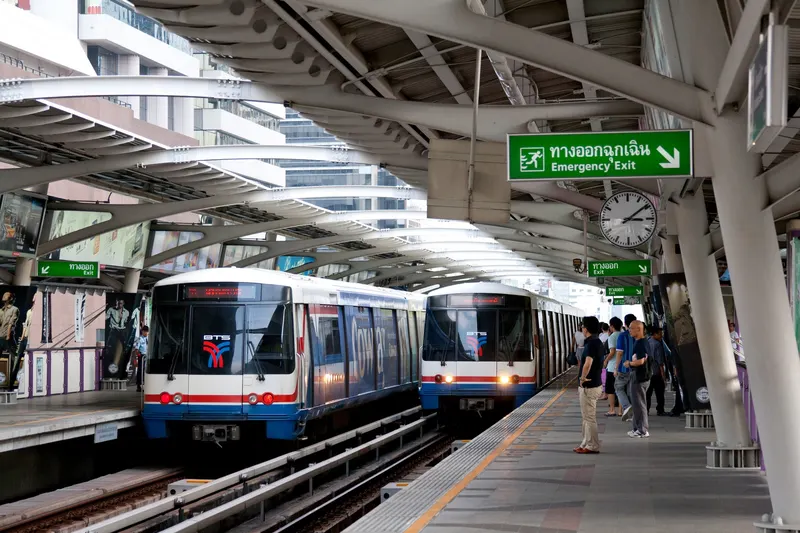
Start by deciding how you will move. If you want to use public transport, anchor yourself above a lift-served station — the MRT subway is the dependable choice because every station has lifts from street level to a level platform, while the BTS Skytrain is faster and scenic but uneven, with plenty of older stations offering only long stairs and escalators. If you would rather go door to door, then closeness to a station matters less than a smooth, short, flat path from the lobby to the curb where a taxi or Grab can pull in. Either way, treat "how do I get from the room to the street to my first sight" as the question that picks your hotel, not the star rating or the photos.
Then match the property to that plan. Bangkok's most reliably accessible rooms sit in the large international 4–5 star chains, which more often have genuine elevators (not just an upper-floor room reached by stairs), ramped or level entrances, wider doorways, roll-in showers or grab-bar bathrooms, and front-desk staff who are used to mobility requests and can arrange an accessible airport transfer. Mid-range and budget hotels can be wonderful value but are far more variable — narrow lifts, a flight of steps up to reception, a raised bathroom threshold or a tub you must climb into are all common — so they need much closer checking before you trust them.
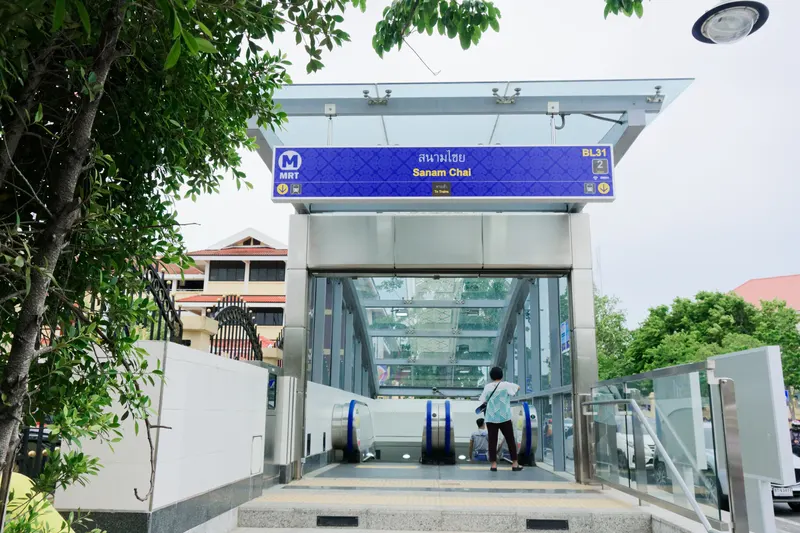
- Decide your transport first: lift-served station, or door-to-door taxi/Grab from a flat hotel forecourt.
- Default to international 4–5 star chains for reliable lifts, ramps, accessible rooms and staff who handle requests.
- Expect mid-range and budget hotels to be inconsistent — step-up entries, narrow lifts and high bathroom thresholds are common.
- Confirm a working elevator, not merely a room on an upper floor.
- Prioritize the shortest possible flat path between your room, the street and your first sight.

Book ahead
Reserve an accessible/roll-in room directly and ask the hotel to confirm the exact step-free path, bathroom layout and lift in writing — listings and floor plans go out of date
Find your bearings
Map pins
Map data © OpenStreetMap contributors · Tiles © OpenFreeMap
The best areas for accessible hotels
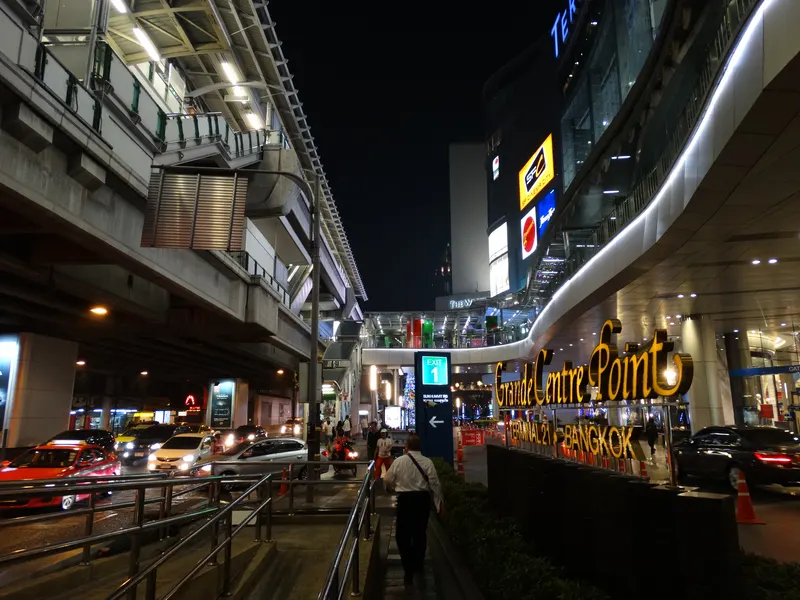
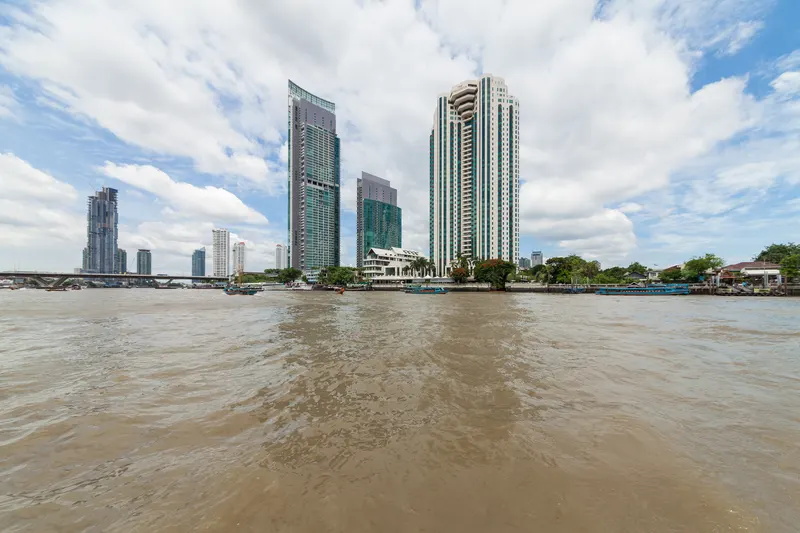
Sukhumvit is the most practical all-round choice. The BTS interchange at Asok sits on top of the MRT at Sukhumvit, several stations along the line have lifts, and a string of polished malls — among them EmQuartier and Terminal 21 — give you flat, cool, lift-served space between sights along with hotels that connect to or stand right beside a station. Phrom Phong and Asok are the easiest sub-areas to roll around. Riverside and Thonburi are the other strong pick for accessibility: the grande-dame riverfront hotels are generally step-free at the entrance, and ICONSIAM on the Thonburi bank is fully lift-served, river-facing and a comfortable anchor for a whole afternoon with minimal walking, while Sathorn (Central) Pier links to BTS Saphan Taksin for one of the smoother river-to-train hops in the city.
Silom and Sathorn work well too, mixing modern business hotels with rooftops, fine dining and Lumphini Park, and both the BTS and the MRT run through the area so you can usually find a lift-served route. Siam is the central, rain-proof shopping core — flat malls, family attractions and good transit — though the crowds and the elevated walkways between malls can be tiring, so check that your hotel has a sheltered, level link rather than a long staircase down to street level. The atmosphere-led areas — Rattanakosin (the Old Town) and Chinatown/Yaowarat — are the hardest for accessibility: the trains are further away, the lanes are narrow and the surfaces are at their roughest, so if you stay there, plan on relying on metered taxis and on entering only the flatter, better-surfaced sights.
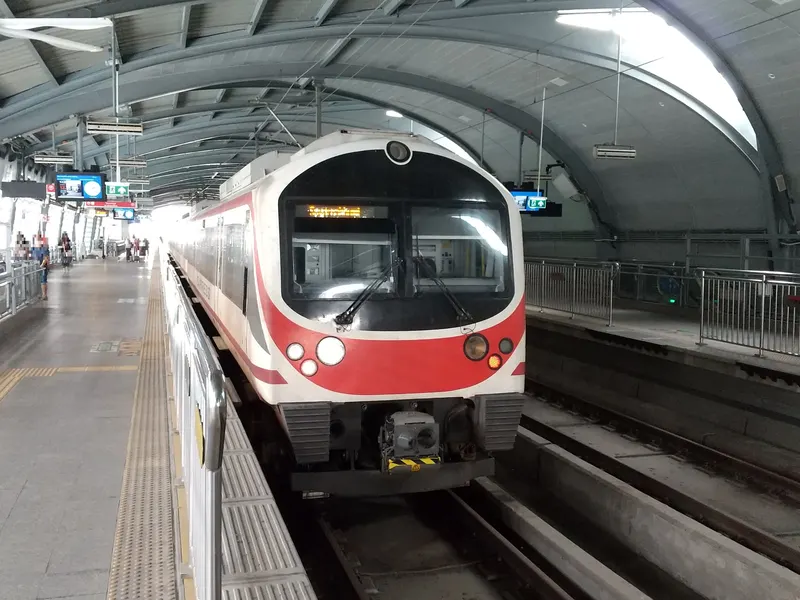
Wherever you land, two amenities pay for themselves in the heat: a pool, so you can rest and cool down without leaving the building, and a station within an easy roll or a forecourt a taxi can reach without a long pavement slog. If you are arranging an accessible airport transfer, a hotel near the Airport Rail Link's city end (around Phaya Thai or Makkasan) can simplify the connection — but for most travelers with a chair or heavy bags, a pre-booked accessible van or a Grab from the airport's designated pickup zone is the lower-stress door-to-door option.
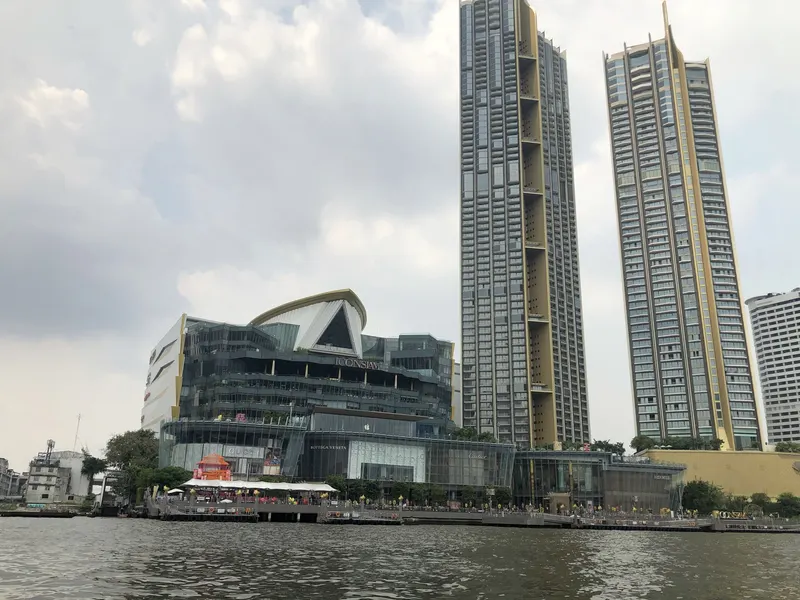
- Sukhumvit (Asok · Phrom Phong) — interchange transit, lift-served malls, hotels beside stations.
- Riverside & Thonburi — step-free grande-dame hotels, ICONSIAM and an easy pier-to-BTS link at Sathorn.
- Silom & Sathorn — business hotels with both BTS and MRT access and Lumphini Park nearby.
- Siam — central and rain-proof, but check for level, sheltered links rather than long staircases.
- Old Town & Chinatown — most characterful but hardest to roll; plan on taxis and flatter sights only.

What to check before you book a room
Photos and a tick-box "accessible" filter are not enough in Bangkok, where listings and floor plans go out of date and the word "accessible" can mean very different things property to property. Book the room you actually need directly with the hotel, then ask them to confirm the specifics in writing. The questions that matter most are the ones the booking site rarely answers: is there a true step-free path from the street to reception and from the lift to the room, or is there a step, a ramp that is too steep, or a revolving door with no flat side entrance? How wide are the doorways and the lift? Is there a roll-in shower, or only a tub you must climb into, and are there grab bars by the toilet and shower? Is there a raised threshold at the room or bathroom door?
Then sort the journey at each end. Ask whether the hotel can arrange an accessible airport transfer — a van that takes a chair, or at least a driver who will help with bags and boarding — rather than improvising a taxi at midnight with luggage and a tired traveler. For wheelchair users, a folding chair travels far more easily in a standard Bangkok taxi than a rigid one, and the Grab app lets you message the driver in advance to explain that you have a chair or need help; both are cheap by Western standards and the door-to-door comfort is worth it. If you plan to use the trains, confirm that your home station has a lift and that any interchange you will use does too, because escalators alone do not help a chair and can be set to run one direction only.
Finally, plan the day shape, not just the room. Build each day around one anchor sight and one comfortable, cool, flat fallback (a mall, a café, the hotel pool) nearby, do the demanding outing in the cool morning, and retreat to air conditioning through the punishing midday hours. Give yourself permission to be slow: Bangkok packs enough into a single riverside afternoon or one good market that you never need to rush across the city, and a trip planned around fewer, calmer stops is usually the better trip — not a compromise. For the wider on-the-ground logistics of step-free transit, boats and lower-effort sightseeing, pair this page with our dedicated accessibility guide.
- Confirm in writing: step-free path to reception and room, door and lift widths, roll-in shower vs tub, grab bars, thresholds.
- Ask the hotel to arrange an accessible airport transfer rather than improvising at the terminal.
- A folding wheelchair fits a standard taxi better than a rigid one; use Grab to message the driver about your needs.
- If you will use trains, verify lifts at your home station and any interchange — not just escalators.
- Plan one anchor sight per cool morning with a flat, air-conditioned fallback nearby; rest through midday heat.
Accessible BangkokStep-free transit, river boats, flat temples and lower-effort day plans.
 Taxis & Grab
Door-to-door rides, fixed fares and messaging the driver about a chair.
 Getting around Bangkok
How the BTS, MRT, river boats and ride apps fit together.
MRT guideThe subway with lifts at every station and level boarding.
Accessible hotels for couples, families and luxury trips
Once you have the area and the access basics covered, the choice narrows by trip type. Couples and honeymooners chasing riverside or rooftop views are well served by the big riverfront and Silom/Sathorn hotels, which combine step-free entrances and reliable lifts with the romance — just confirm the bathroom layout and that the view terrace or rooftop bar is reachable without stairs. Families traveling with a stroller, a grandparent or a wheelchair user want pools, space and breakfast near a lift-served station; the larger Sukhumvit and Siam properties tend to deliver the most room to maneuver and the most predictable accessible bathrooms, and a pool gives everyone a low-effort way to spend the hottest hours.
Luxury trips give you the widest accessible choice in Bangkok, because the five-star chains are where genuine roll-in showers, grab bars, ramped entrances, accessible airport transfers and trained staff are most consistently found — and where the front desk is most able to pre-arrange the small things that make a difference, from a van transfer to a ground-floor breakfast venue. Whichever way your trip leans, compare by area, transit and real access features rather than star rating alone, use the curated hotel guides below to shortlist, and confirm current rates and the exact accessible-room details directly with the property before you book.
 Family hotels
Pools, space, breakfast and easy station access for all ages.
 Luxury hotels
Five-star bases where accessible rooms and staff are most reliable.
 Best hotels in Bangkok
A curated framework by area, transit, views and value.
 Airport hotels
Bases near Suvarnabhumi and Don Mueang for easy transfers.
Luxury — the most dependable accessible rooms
Luxury is where Bangkok's accessibility is most reliable: the international five-stars below publish dedicated accessible or mobility rooms — think roll-in showers, grab bars and step-free entrances — and have the staff to pre-arrange the small things, from an accessible airport transfer to a ground-floor breakfast. We've spread the picks across the main bases so there's a verified option near most sights. Always confirm the exact room layout and the features you need directly with the hotel before booking.
- Bang Rak (Charoen Krung riverside)
Mandarin Oriental, Bangkok
Bangkok's first luxury hotel, open since 1876 and still topping world's-best lists, with the award-winning Oriental Spa reached by hotel boat across the Chao Phraya.
the grande-dame, still the gold standard ✦
- Riverside · Charoen Krung฿฿฿ · ~฿25,000/night
Capella Bangkok
Repeatedly ranked the world's best hotel in The World's 50 Best Hotels list, with just 101 all-river-facing rooms and villas.
our pick for a riverside splurge ✦
- Ratchaprasong · Ratchadamri
Grand Hyatt Erawan Bangkok
The famous Erawan Shrine sits at the hotel's doorstep on the Ratchaprasong corner.
- Sukhumvit · Asok฿฿฿ · ~฿7,500/night
Sheraton Grande Sukhumvit, a Luxury Collection Hotel, Bangkok
Connected directly to BTS Asok via a covered walkway, with a tropical free-form pool set in lush gardens.
- Phloen Chit (Lumphini)฿฿฿ · ~฿7,000/night
The Okura Prestige Bangkok
Its cantilevered 25-metre infinity pool on the 25th floor is regularly named the best hotel rooftop pool in Bangkok.
- Siam · Pathum Wan
Siam Kempinski Hotel Bangkok
Built around lush tropical gardens recreating the historic Sra Pathum Palace grounds, linked by a covered walkway straight into Siam Paragon.


Mid-range and airport — reliable accessible bases
Below the top tier, a smaller but solid set of mid-range and airport hotels publish genuine accessible rooms and step-free access — useful on a tighter budget or for an early flight. The Sathorn pair link step-free to the Skytrain, and the airport options sit beside the terminals for the easiest transfers. As always, confirm the specific accessible-room details with the hotel before you book.
- Sathorn
Eastin Grand Hotel Sathorn
The only hotel in Bangkok with its own private skybridge directly connecting to a BTS station (Surasak).
- Riverside · Charoen Nakhon (Khlong San, Thonburi bank)
Millennium Hilton Bangkok
A 32-storey vertical riverside resort crowned by the 360-degree ThreeSixty rooftop bar and jazz lounge.
big river views for less ✦
- Silom · Sathorn฿฿
Holiday Inn Express Bangkok Sathorn
Sits on Soi Pipat off Silom, a 3-minute walk from Chong Nonsi BTS, making it a no-frills CBD base.
- Sukhumvit · Thong Lo฿฿ · ~฿3,500/night
Staybridge Suites Bangkok Thonglor by IHG
IHG's first Staybridge Suites in the Asia-Pacific region, with every suite including a full kitchenette plus washer/dryer for extended stays.
- Suvarnabhumi Airport
Novotel Bangkok Suvarnabhumi Airport
A 612-room full-service airport hotel set over 10.5 hectares, reached from the terminal in about five minutes via an air-conditioned underground walkway.
- Suvarnabhumi Airport฿฿฿
Hyatt Regency Bangkok Suvarnabhumi Airport
The closest full-service luxury hotel to Suvarnabhumi, linked to the main terminal by a 200-metre air-conditioned underground walkway so you never step outside.


.jpg?width=1200)
Sources
- MRT Bangkok (MRTA) ↗
Official subway operator — verify lifts at your home station and any interchange (escalators alone do not help a chair).
- BTS Skytrain (official) ↗
Official Skytrain site — lift provision is patchier on the BTS than the MRT, so confirm a lift at your home station before relying on it.
- Chao Phraya Express Boat ↗
Official river-boat operator — Sathorn (Central) Pier is the river stop that links to the BTS at Saphan Taksin.
- Suvarnabhumi Airport transport ↗
Official airport transport guide — the Airport Rail Link runs to its city-end stations at Makkasan and Phaya Thai; confirm current accessible-transfer options.
- Suvarnabhumi Airport (official) ↗
Official airport site — check current accessible-transfer, assistance and pickup-zone arrangements before you travel.
- Bangkok Metropolitan Administration ↗
City information; confirm any access or transit details locally before relying on them.
- Mandarin Oriental — accessible rooms ↗
Accessible Rooms listed as a dedicated room type on the official site.
- Grand Hyatt Erawan — accessibility ↗
Accessible guest rooms with mobility features and step-free routes.
- The Okura Prestige — accessibility FAQ ↗
Accessible rooms with roll-in showers and grab rails; lifts to all floors.
- Holiday Inn Express Sathorn — accessibility ↗
Accessible rooms with grab bars, transfer shower seat and ADA-compliant lifts.
- Novotel Suvarnabhumi — accessible comfort ↗
Accessible rooms with wider doorways, lowered fixtures and grab bars.