- Time needed
- Plan three to four days to do the shortlist comfortab…
- Best time
- Cool season (roughly Nov–Feb) for walking
- Getting there
- The Old City sights cluster on the Chao Phraya piers
- Price
- Most temples charge a modest gate fee
Do these first: the temples and the river
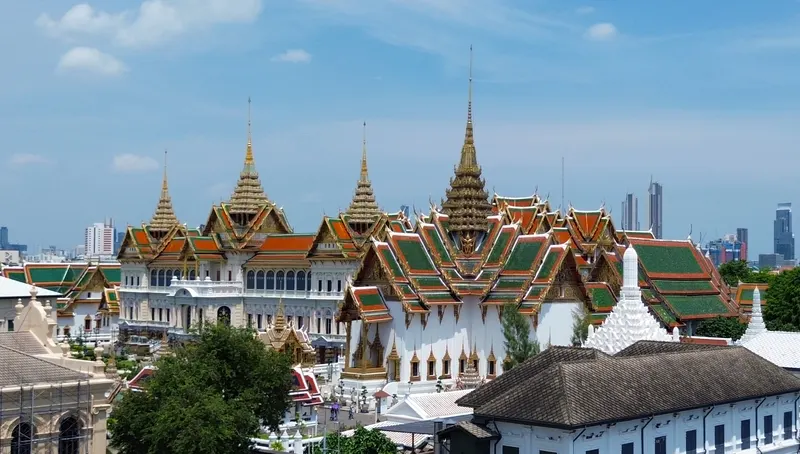
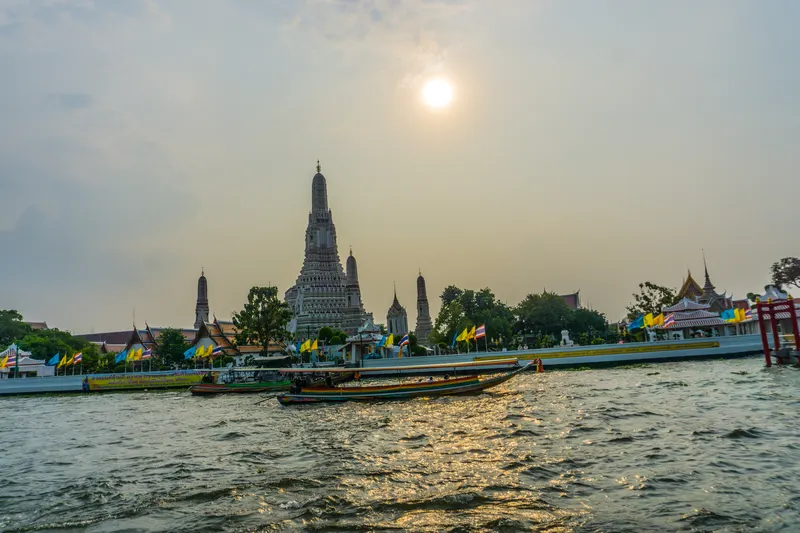
If you only had one perfect Bangkok morning, you would spend it in Rattanakosin, the old royal island where the city began. The classic arc runs the Grand Palace and Wat Phra Kaew at opening, a short walk south to Wat Pho for the giant Reclining Buddha, then the cross-river ferry to Wat Arun, whose porcelain-studded spire is best up close in the morning and best of all watched from the east bank at sunset. These three sit within a short stretch of river, they pair naturally, and they top almost every first-trip list for good reason — the density of gold, mosaic and royal architecture here is unlike anything else in the city.
Go early. The Grand Palace is the busiest sight in Thailand, and by mid-morning the marble courtyards bake and the tour groups thicken. Arriving at opening buys you cooler air, softer light and room to breathe by the Emerald Buddha. All three are working religious sites, so cover your shoulders and knees and be ready to slip off your shoes inside the halls — the dress code at the palace in particular is enforced, not a suggestion.
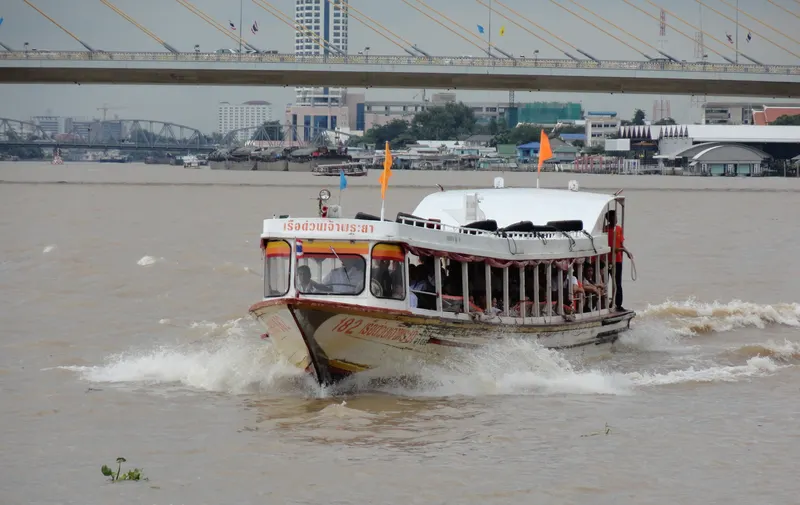
The river itself is half the experience. The Chao Phraya Express Boat doubles as cheap transport and a moving viewpoint of the city's mix of old wats and new towers, and the few-baht cross-river ferries shuttle you to Wat Arun in a couple of minutes. Lean on the boats here rather than taxis — the Old City has no Skytrain, and traffic crawls late morning.
- 1. Grand Palace & Wat Phra Kaew — the most ornate, busiest and strictest on dress code; go at opening.
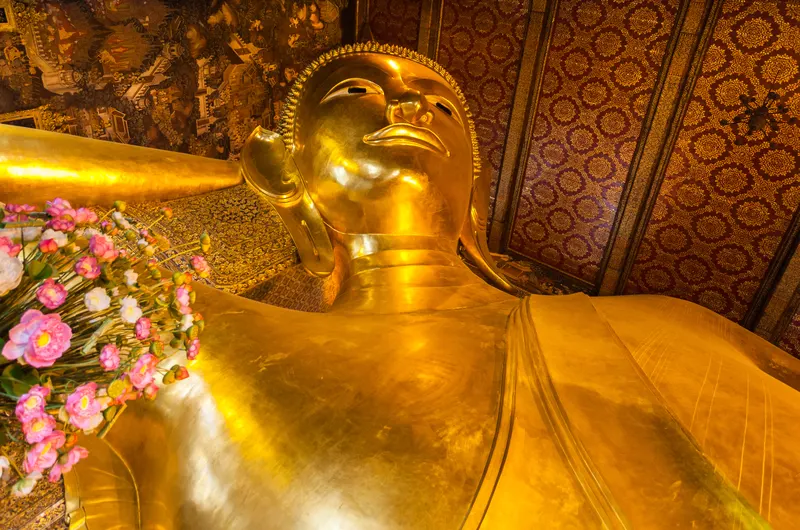
- 2. Wat Pho — the 46-metre Reclining Buddha and the home of traditional Thai massage, a short walk south.
- 3. Wat Arun — cross by ferry from Tha Tien pier for the porcelain prang, then watch it from the far bank at dusk.
- 4. The Chao Phraya river — ride the express boat once for the cheapest, best sightseeing in Bangkok.
Book ahead
Book rooftop tables, dinner cruises, food tours and any sunset slot ahead; temple tickets are bought at the gate
The shortlist, ranked for a first trip
Beyond the temple trio, a first Bangkok visit really comes down to a handful of high-return experiences. The trick is not to cram all of them into every day, but to slot one big outdoor sight into each cool morning, hold the afternoon for shade, and reserve evenings for the city at its most alive. The ranking below is built around reward-per-effort and how naturally each stop pairs with the others, not around ticking off a list.
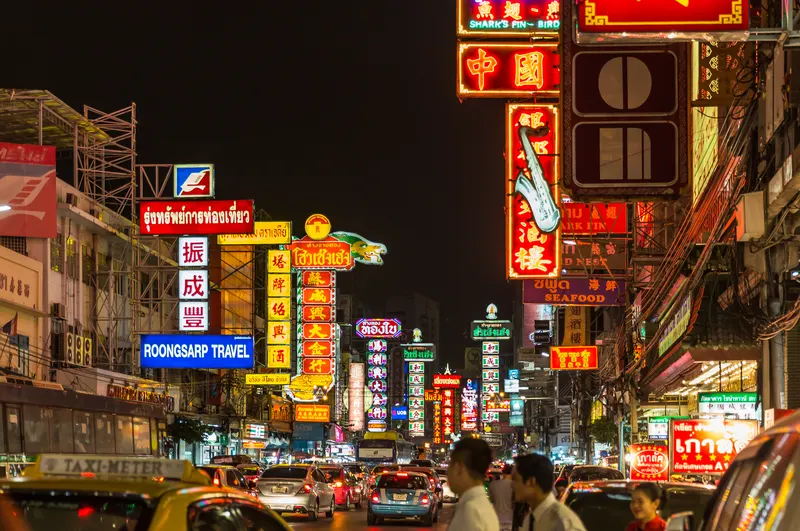
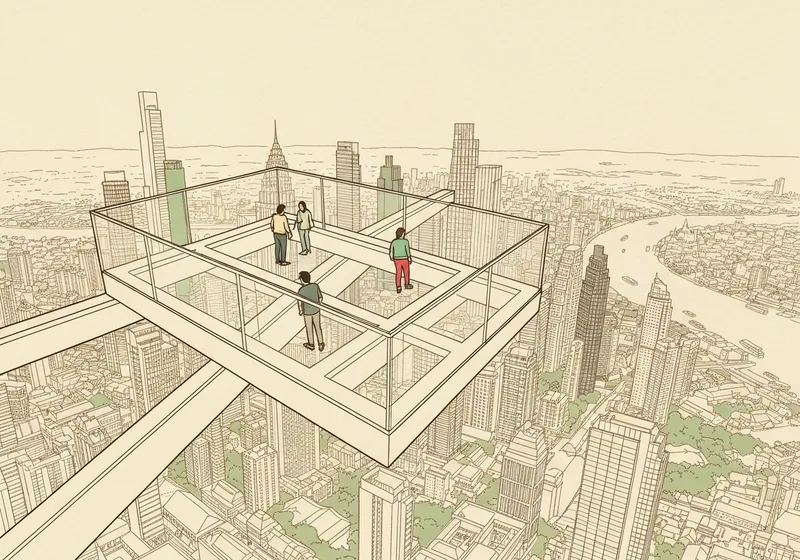
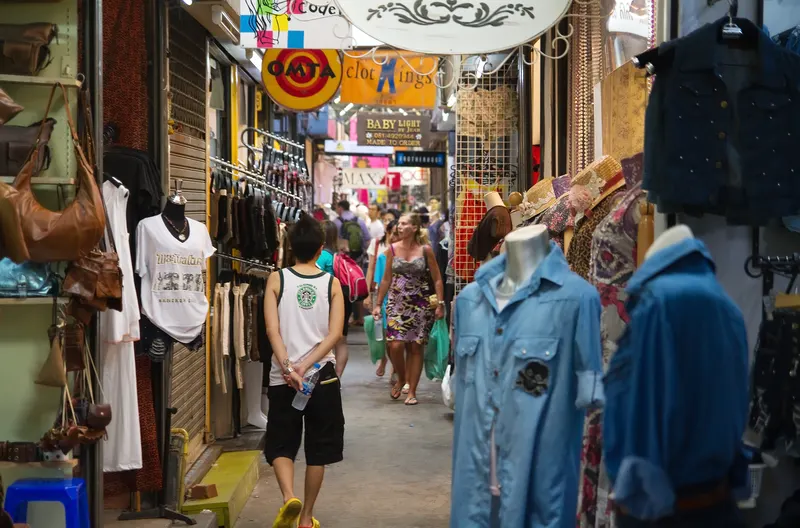
Chinatown — Yaowarat — is the standout after dark, when the strip turns into an open-air kitchen of grilled seafood, noodle stalls and dessert carts; come hungry and graze. For skyline views, the Mahanakhon SkyWalk gives you the city's highest open-air deck, while the rooftop bars of Silom and Sathorn trade an admission fee for a drink with the same panorama at golden hour. The weekend Chatuchak market is a city in itself for browsing, and a night market like Jodd Fairs turns dinner into an event.
Round it out with one slower, cooler experience: a traditional Thai massage, a museum such as Jim Thompson House, or an hour in Lumphini Park in the late afternoon. If you want the river at its most romantic, a Chao Phraya dinner cruise glides past the floodlit Grand Palace and Wat Arun and turns the same skyline you walked all morning into something quieter and golden.
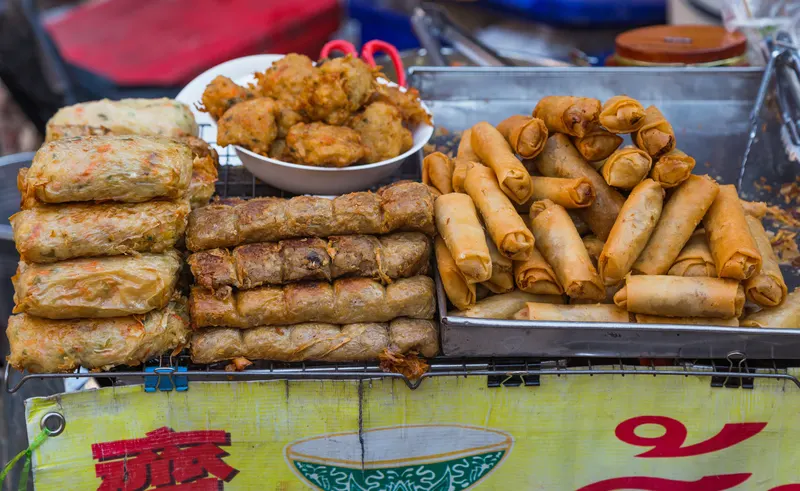
- 5. Chinatown / Yaowarat after dark — the city's best street-food crawl.
- 6. A rooftop or the Mahanakhon SkyWalk at sunset — the postcard skyline.
- 7. Chatuchak Weekend Market — endless browsing if your trip lands on a weekend.
- 8. A night market like Jodd Fairs — dinner, drinks and people-watching in one.
- 9. A traditional Thai massage — the perfect reward for tired temple legs.
- 10. A Chao Phraya dinner cruise — the romantic, heat-free way to end a day.

What to book ahead, and what to leave open
A little planning protects the best experiences. Book rooftop tables, dinner cruises, food tours and cooking classes a day or two ahead, especially in the cool-season peak — the good sunset slots fill, and turning up cold often means the worst seat or no seat at all. Temple tickets, by contrast, are simply bought at the gate on the day; there is no need to pre-purchase, and you should ignore anyone outside who claims the palace is 'closed today' and offers a cheap tuk-tuk tour instead. That is a classic scam, and the main gate is open — walk up to it yourself.
Leave your daytime sightseeing loose enough to flex around the weather. In the rainy season a sharp afternoon downpour can pass through in under an hour, so keep one indoor backup — a mall, a museum, a food court or a spa — ready for each day. The cool season (roughly November to February) is the comfortable sweet spot for walking; in the hot months of March to May, treat shade as a strategy, carry water and start outdoor sights at opening.
If you are building a whole trip rather than a single day, start from a ready-made itinerary and a transport-smart hotel area, then layer these individual sights on top. The one-day temple route is the natural backbone of a first visit, and the longer itineraries slot the rooftops, markets and food crawls around it.


Where these are
Map pins
Map data © OpenStreetMap contributors · Tiles © OpenFreeMap