- Time needed
- A couple of hours at the market
- Getting there
- Roughly 100 km southwest of Bangkok (about 1.5–2 hour…
- Price
- Entry is free
- Best for
- Travelers set on the classic floating-market photo wh…
What Damnoen Saduak actually is
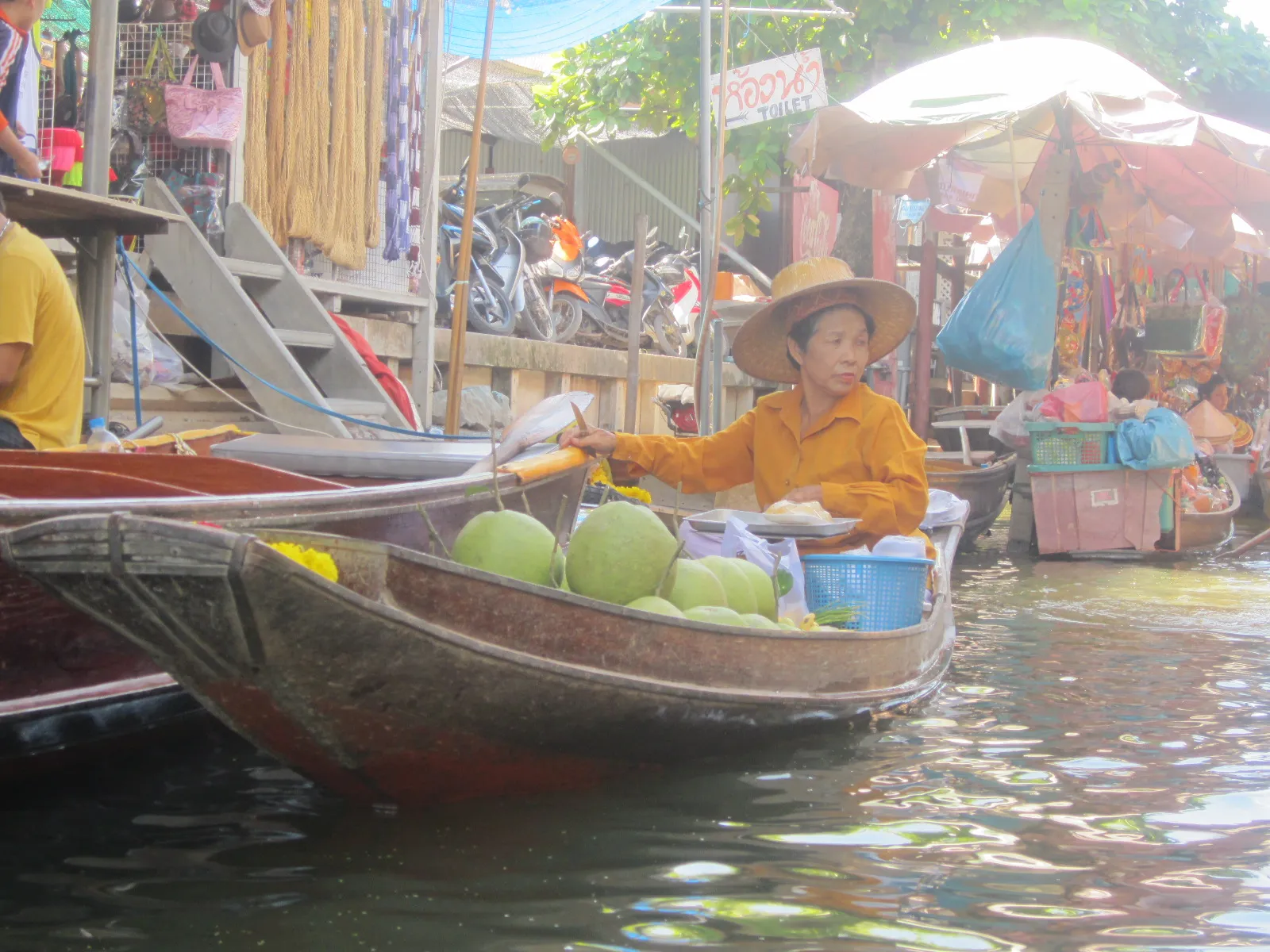
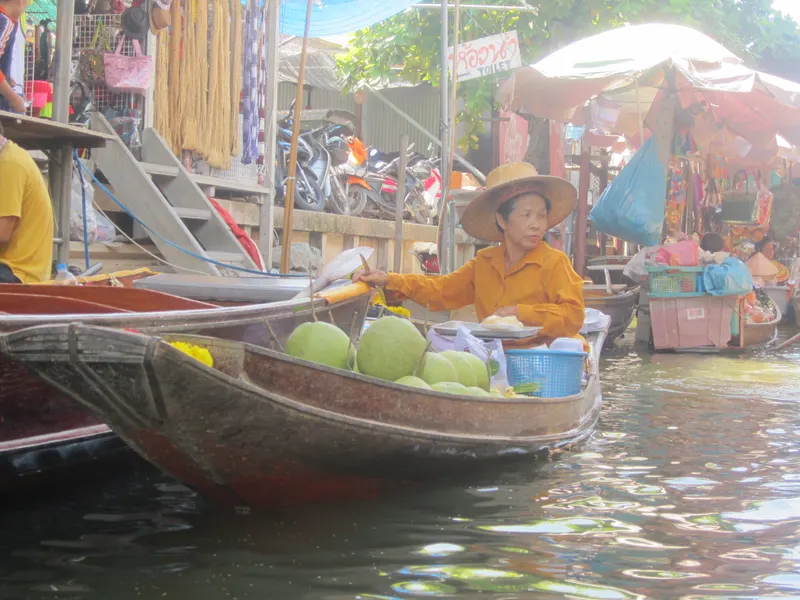
Damnoen Saduak is the floating market that put the genre on the world's bucket list: a network of canals roughly 100 kilometres southwest of Bangkok where vendors in conical hats paddle boats heaped with tropical fruit, and cooks fry noodles and grill skewers over coals balanced on the water. The classic photograph — a tight cluster of laden paddle boats on a sun-dappled canal — is real, and for that single image it remains genuinely photogenic. It is the most famous floating market near Bangkok, and for many travelers it is the reason they take a day trip out of the city at all.
But it is important to set expectations. Damnoen Saduak is heavily commercialised and squarely aimed at tourists. The canals can become a slow-moving traffic jam of boats by mid-morning, the souvenir stalls sell the same trinkets at marked-up prices, and the sales pressure is real. None of that means you should not go — plenty of people enjoy it and get the photo they came for — but it does mean going in clear-eyed, early and with a plan, rather than expecting a sleepy, authentic canal village.
Watch out
Overpriced boat rides, paddle-up vendors and souvenir mark-ups are common — agree prices upfront and walk away from hard sells
Book ahead
Most visit on a tour or with a driver; book ahead and consider the less touristy alternatives
Timing, boats and how to do it well
The single most important rule is to arrive at opening. Early in the morning the light is soft, the canals are calmer, and you get the market before the tour buses and the heaviest boat traffic arrive. By mid-morning the same canals jam with boats nose to tail and the heat climbs, which is when the experience tips from charming to chaotic. Going early also means cooler air on an open-air, humid site where there is little shade.
Boats are the heart of the market and the main place people get overcharged. Fares are priced per boat or per person, and you should agree the price clearly before you board — confirm the route, the duration and the total, and do not let a vendor start paddling on a vague 'we'll see at the end' arrangement. The same scepticism applies to the paddle-up vendors selling fruit and souvenirs and to the stalls on the banks: prices are inflated for tourists and bargaining is expected. Carry small cash, keep your bag close, and feel free to walk away from any hard sell.
- Arrive at opening for soft light, calmer canals and fewer crowds.
- Agree any boat fare — route, duration and total — before you board.
- Expect inflated souvenir and food prices; bargain and walk away from hard sells.
- Go open-air-ready: water, sun cover and a rain layer in the wet season.
Getting there and pairing with Maeklong
Damnoen Saduak is too far southwest of Bangkok to be casual: it is a full-day round trip, and most travelers reach it by guided tour, minivan or private driver rather than fussing with public connections. A tour or driver handles the early start that makes or breaks the visit and removes the logistics; a private driver adds the flexibility to combine stops at your own pace. Whichever you choose, build a buffer into the return for Bangkok's traffic.
The classic move is to pair Damnoen Saduak with the Maeklong Railway Market, the nearby market where vendors fold back their awnings and pull in their baskets as a train inches through the stalls, then reset as if nothing happened. The two sit on the same southwestern loop and combine into one full, theatrical day — many tours and drivers offer exactly this pairing, which is the most efficient way to see both.
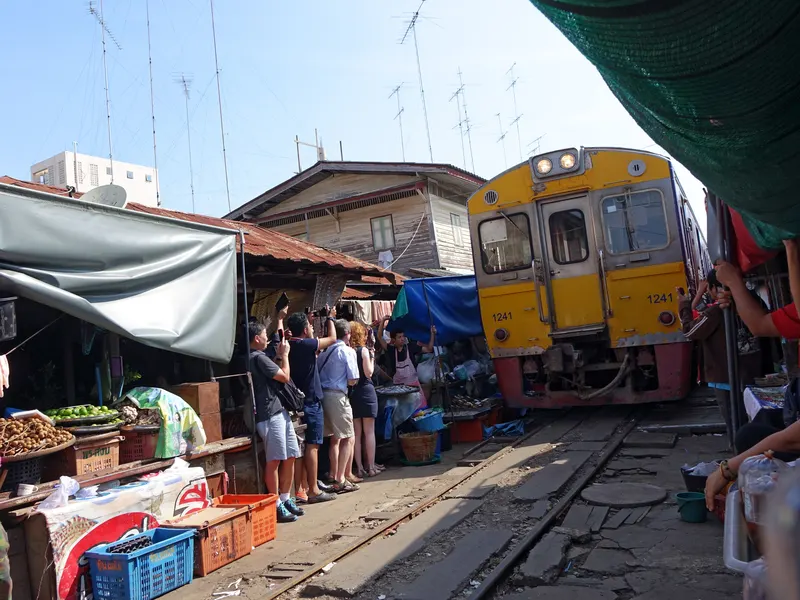
- A full-day round trip, usually by tour, minivan or private driver.
- A private driver is most flexible for combining stops at your own pace.
- Pair it with the Maeklong Railway Market on the same southwestern loop.
- Pad the return for Bangkok's evening traffic.
Better alternatives if you want authenticity
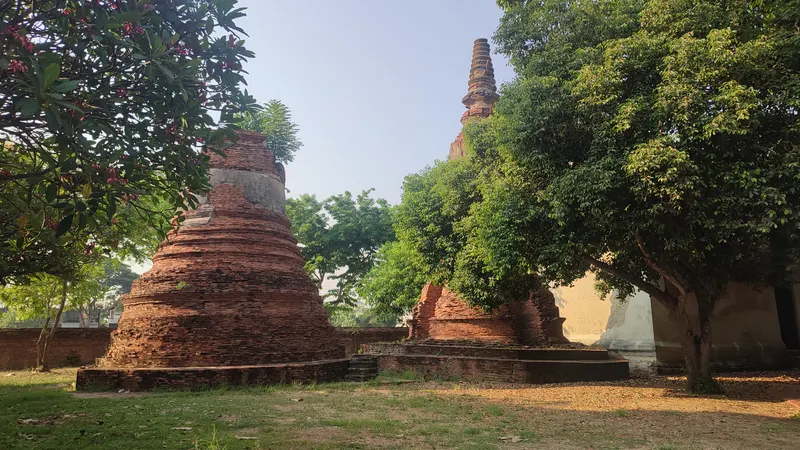
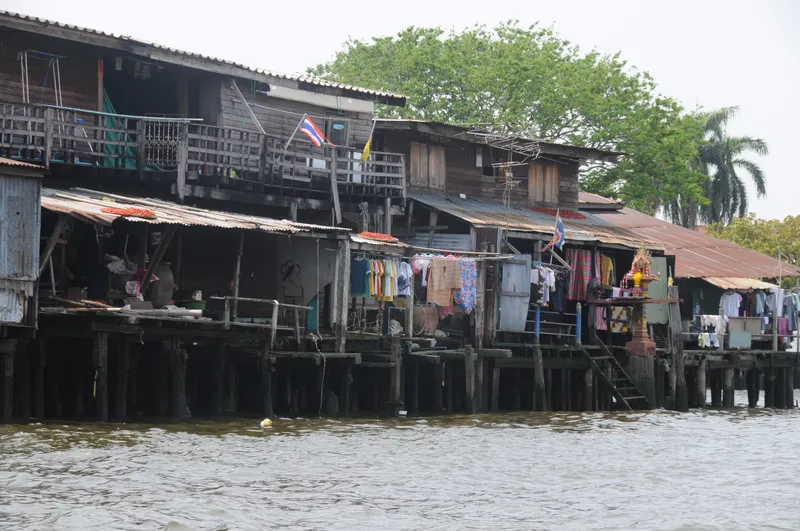
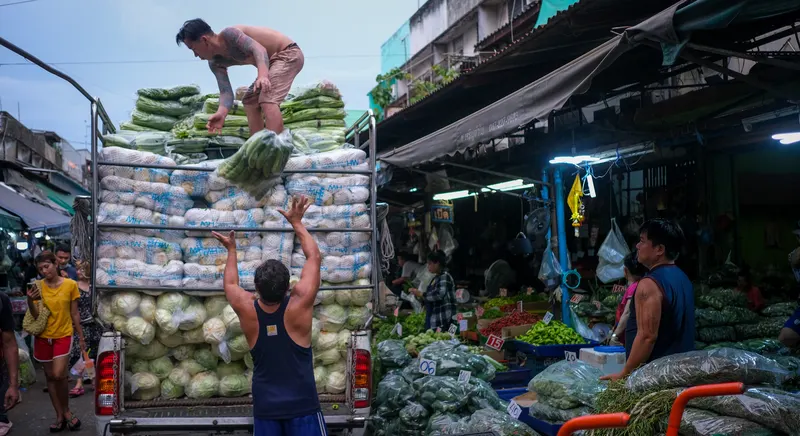
If the tourist-trap dynamics put you off, you have good alternatives. Amphawa is the floating market locals actually frequent — a canal-side weekend market that peaks in the late afternoon and evening, with grilled seafood, a strong Thai crowd and firefly boats after dark. Closer to the city, Khlong Lat Mayom and Taling Chan in Thonburi are food-forward weekend markets that feel genuinely everyday, cost less, and spare you the long southwestern drive entirely.
None of these match Damnoen Saduak's exact paddle-boat-flotilla photo, but all of them offer a more authentic, less pressured canal-and-food experience. The honest recommendation: if you specifically want the famous image and will go early and manage the selling, Damnoen Saduak is fine; if you want a market that feels lived-in, pick Amphawa for the evening or Lat Mayom for an easy near-city visit instead.
Common questions
Is Damnoen Saduak worth visiting? For the classic floating-market photo, yes — if you go at opening and accept the tourism. If you want an authentic, low-pressure market, Amphawa or the Thonburi markets are better choices.
Is Damnoen Saduak a tourist trap? It is heavily commercialised, with inflated prices, sales pressure and canal jams by mid-morning. It is not a scam, but it is a tourist market, so go early, agree boat prices upfront and bargain on souvenirs.
What time should you arrive? At opening, in the early morning. The canals are calmer, the light is better, the air is cooler and you beat the worst of the boat traffic and tour-bus crowds.
How do you get to Damnoen Saduak? It is roughly 100 km southwest of Bangkok, a full-day round trip usually done by guided tour, minivan or private driver, and often combined with the Maeklong Railway Market on the same loop.
Sources
- Tourism Authority of Thailand ↗
Official tourism source for Damnoen Saduak's location and market timing.