- Time needed
- 45–60 minutes for the Buddha and the museum
- Best time
- Morning while it is cool and quiet
- Nearest
- MRT Hua Lamphong
- Price
- A small fee to see the Golden Buddha hall
The Golden Buddha and the museum below
Wat Traimit holds one of Bangkok's most extraordinary objects: the Golden Buddha (Phra Phuttha Maha Suwana Patimakon), a seated image of more than five tonnes of solid gold. Its fame rests on its rediscovery — for generations it sat encased in plain plaster, taken for an ordinary stucco image, until the covering cracked open during a move and revealed the gold beneath. The image now sits in a hall on the upper floor, glowing under soft light, and it is small in footprint but quietly astonishing up close.
Beneath the Buddha hall, the temple runs a small museum across a couple of floors. One section tells the story of the image itself — its origins, its long disguise and its accidental rediscovery — while another traces the history of Bangkok's Chinatown and the migrant community that built it into the trading heart it remains today. The exhibits are a genuinely worthwhile add-on, and they explain the district you are about to walk into.
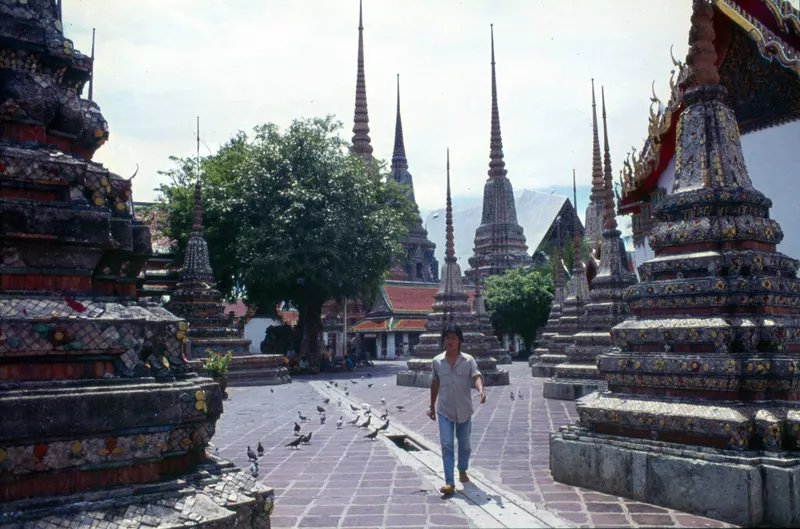
It is a compact sight rather than a sprawling temple complex, so it pairs perfectly with the rest of Chinatown rather than filling a whole day on its own. As at any temple, cover your shoulders and knees and remove your shoes before entering the hall, and keep your voice low — this is an active place of worship as well as a museum.
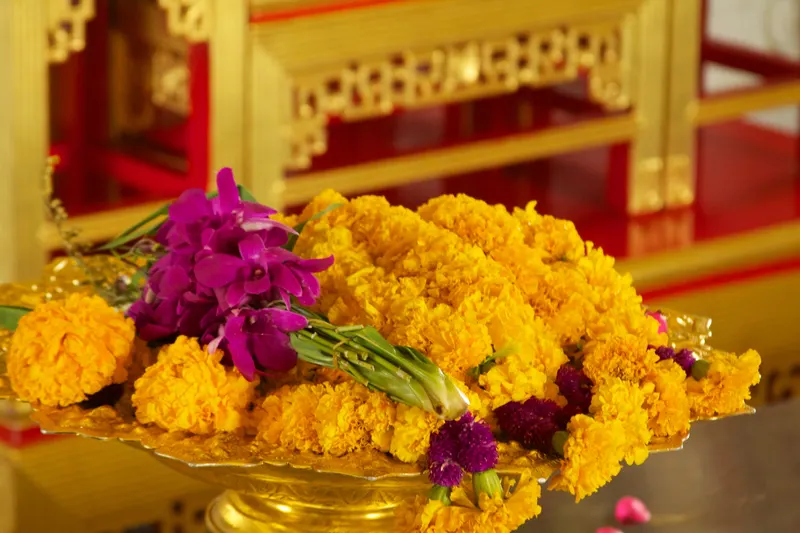
- The Golden Buddha: more than five tonnes of solid gold, rediscovered when its plaster shell cracked
- A small museum below covers the image's story and the history of Chinese Bangkok
- Compact and air-conditioned — under an hour for the Buddha and the exhibits
- An active temple: dress modestly, remove shoes, keep your voice down
Watch out
Ignore anyone outside who tells you the temple is 'closed' and offers an alternative tuk-tuk tour — a classic Bangkok gem/temple scam; walk straight to the gate
Dress code
Working temple — cover shoulders and knees, remove shoes before entering the hall
Getting there and pairing it with Yaowarat
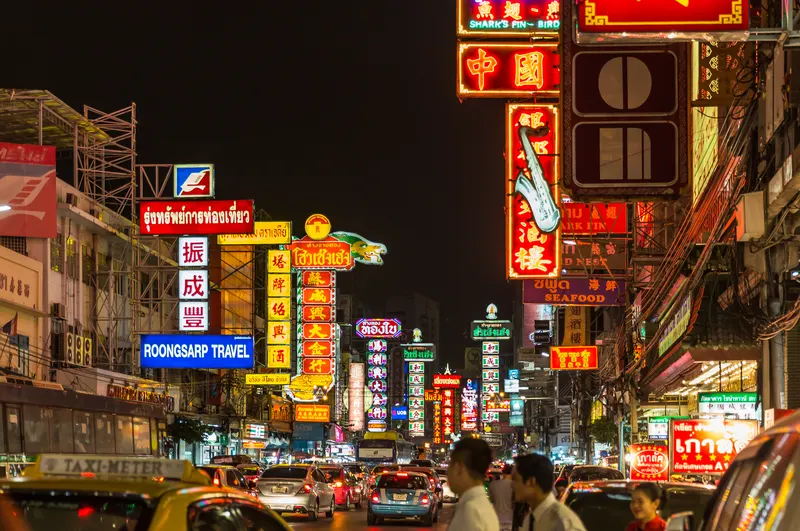
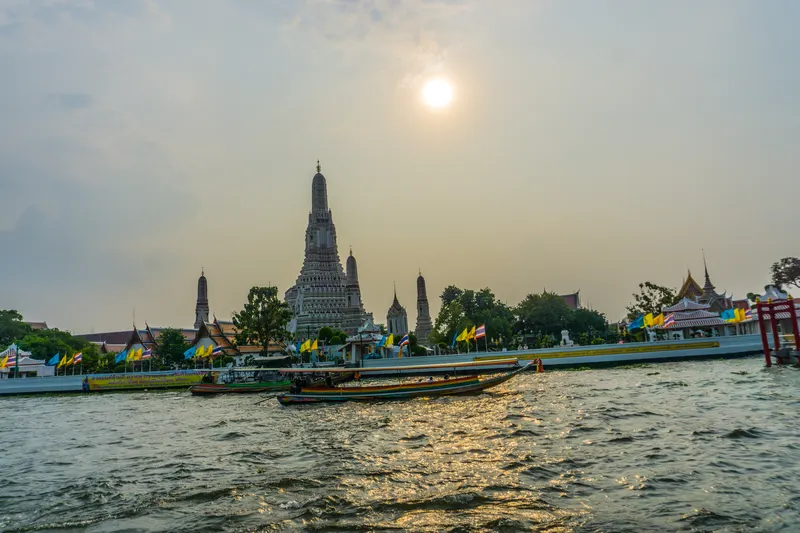
Wat Traimit is one of the easiest Old-Bangkok sights to reach: take the MRT Blue Line to Hua Lamphong, and the temple sits a few minutes' walk away beside the ornate Chinatown gateway arch (Odeon Circle). From the river, Ratchawong pier connects you to the orange-flag Chao Phraya boats and a short walk in. Because it sits right at the eastern entrance to Yaowarat, it is the logical place to begin a Chinatown visit.
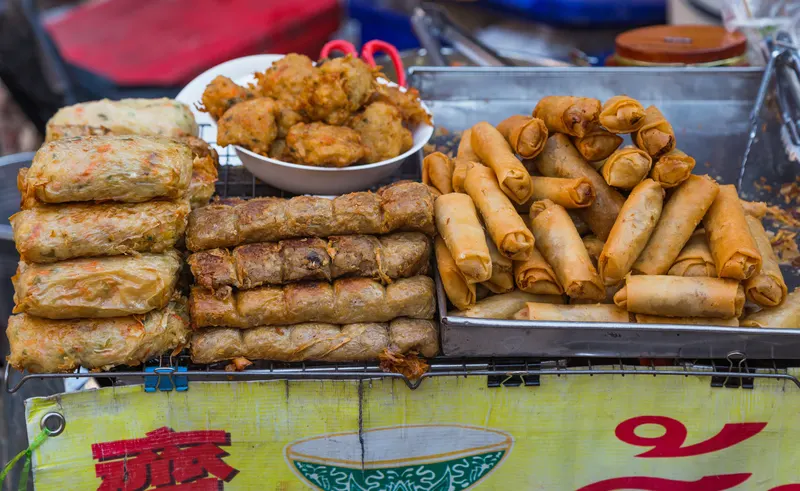
The smartest plan is to treat Wat Traimit as the cool, air-conditioned start of a Chinatown afternoon-into-evening. See the Golden Buddha and the museum first, then walk west into the lanes — past the gold shops, herb stalls and shrine smoke — timing it so you hit Yaowarat's legendary street food as the woks fire up after dark. The dinner scene peaks in the early-to-mid evening, so build toward it rather than arriving at midday when the heat is fierce and the carts are quiet.
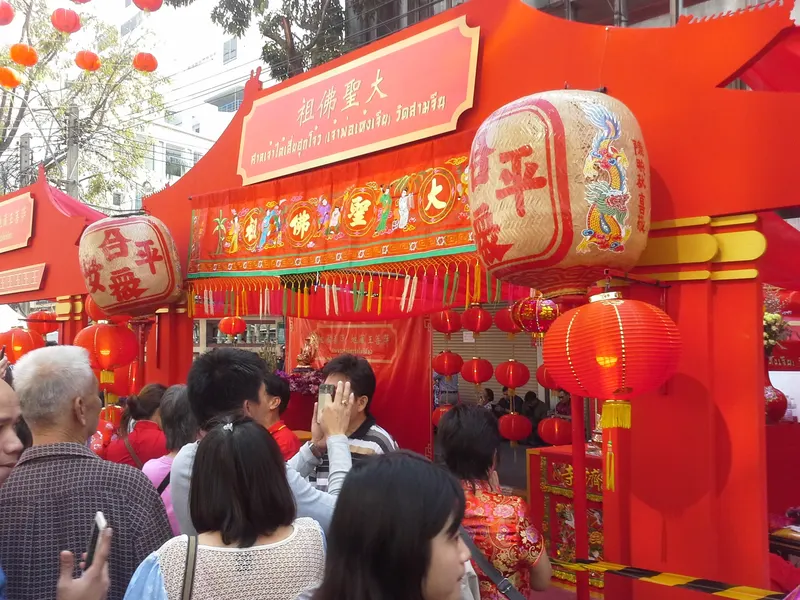
If your trip lands near Chinese New Year, Chinatown becomes one of the most atmospheric places in the city, with red lanterns, lion dances and dense crowds — and Wat Traimit and nearby Wat Mangkon are at the heart of it. In that window, go early, take the MRT to skip the traffic, and confirm any temple-event timings before you set out.
- Nearest metro: MRT Hua Lamphong, a few minutes' walk to the gateway arch
- By river: Ratchawong pier from the orange-flag Chao Phraya boats
- Start cool at the temple, then crawl Yaowarat's street food after dark
- Around Chinese New Year, expect heavy crowds — go early and ride the MRT
Sources
- Tourism Authority of Thailand ↗
Official information on opening hours and Chinatown events.