- Time needed
- 45–60 minutes for the climb
- Best time
- Early morning for cool air and soft light
- Nearest
- MRT Sam Yot (Blue Line)
- Price
- Around 50 THB for foreigners to climb to the chedi (2…
What the Golden Mount is, and why you climb it
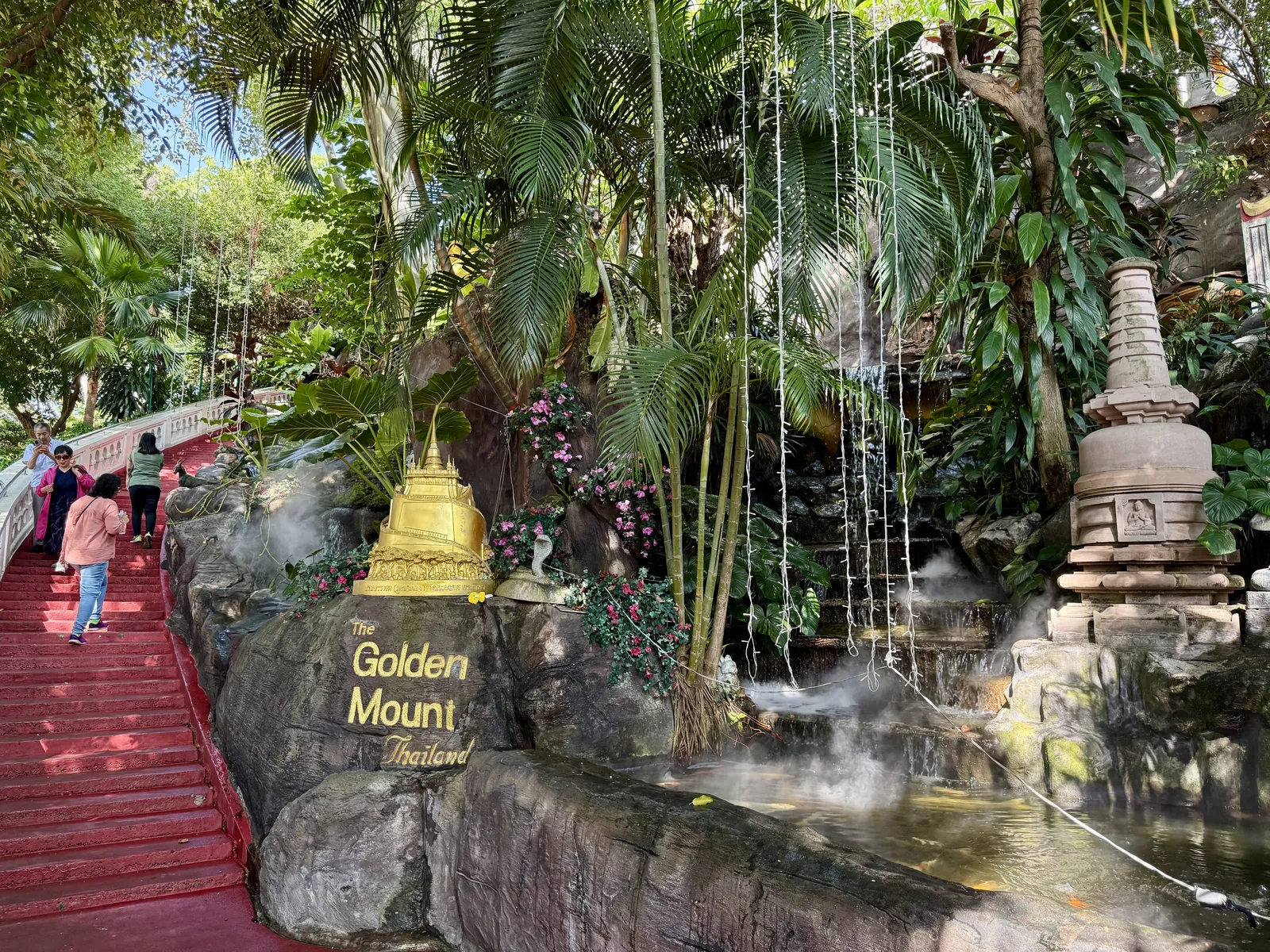
The Golden Mount — Phu Khao Thong — is the artificial hill at Wat Saket, and it is the closest the flat Old City comes to a viewpoint. A spiral staircase of roughly 300 steps winds up the outside of the mound, past hanging bells, prayer flags and shaded planting, to a gilded chedi on a breezy terrace with a 360-degree sweep over Rattanakosin: low temple roofs, golden spires and, further out, the towers of the modern city. The view is the reward, but the climb is the experience.
Wat Saket itself is an old temple that predates Bangkok's tourist boom, and the working temple grounds at the base are free to wander. The hill was raised over generations and crowned with the chedi to enshrine a relic, which is why the upper terrace is treated as a shrine — you will see locals making merit, ringing the line of bells on the way up and leaving small offerings at the top.
Unlike a paid observation deck, the Golden Mount costs only a modest donation to climb, and even at its busiest it rarely feels like the scrum of the Grand Palace. It is the most rewarding low-effort, low-cost view in the historic core, and it slots neatly into a walking morning or a golden-hour stop before dinner in the Old Town.
- Around 300 steps up a gentle outdoor spiral — manageable for most, with rest points and shade
- A gilded chedi and a full 360-degree panorama of the old royal island at the top
- Free temple grounds at the base; a modest donation/entry for the climb itself
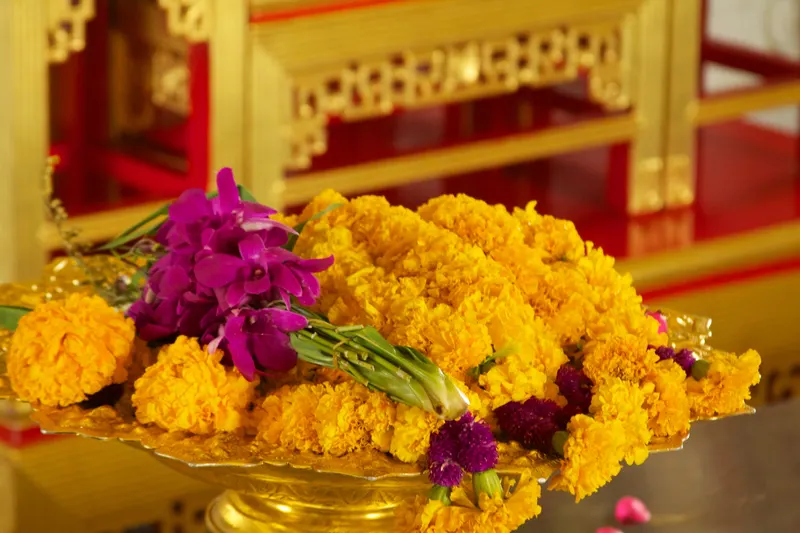
- Ring the bells on the way up — it is part of the ritual, not just decoration
Dress code
Working temple — cover shoulders and knees, remove shoes before entering the shrine levels
How to climb it: timing, the steps and the heat
Treat the climb as an outdoor activity, not a quick photo stop. The single best lever is timing: go early in the morning for cool air, soft light and an almost-empty terrace, or come for the hour around sunset when the chedi glows and the city lights begin to flicker on. The flat, hot middle of the afternoon is the one window to avoid — the steps are exposed and the stone holds the heat, which is brutal in the March-to-May hot season.
The stair itself is gentle and well shaded in places, but it is still around 300 steps, so pace yourself, carry water and use the rest landings. The terrace at the top is breezy, which is part of why it feels so good after the streets below. In the rainy season, keep a dry window for the open terrace and have a covered backup nearby, because the climb is no fun in a downpour and the view disappears into the cloud.
Because the upper levels are a shrine, the same temple rules apply as anywhere in Bangkok: cover your shoulders and knees, remove your shoes where the signs ask, keep your voice low around people making merit, and never point your feet at a Buddha image. Photography is fine on the terrace; be discreet around worshippers.
- Go early or near sunset; skip the flat midday heat on the exposed stair
- Around 300 steps — pace yourself, use the shaded landings, carry water
- Dress modestly and remove shoes on the shrine levels
- Rainy season: climb in a dry window and keep a covered backup ready
Getting there and what to pair it with
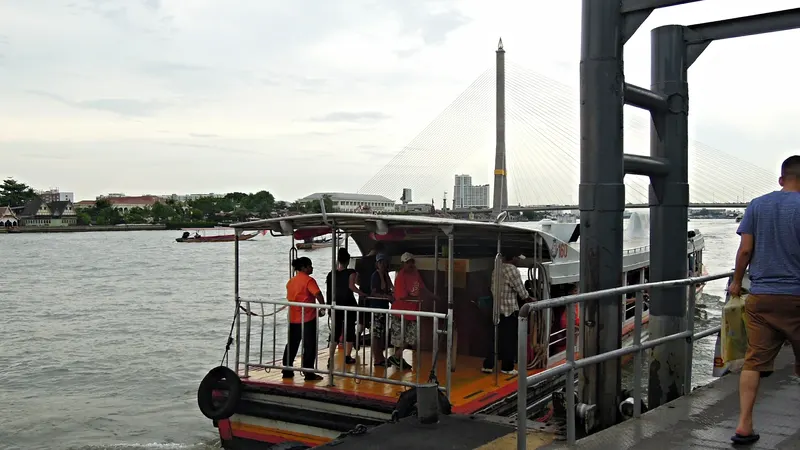
The Golden Mount sits in the heart of Rattanakosin, away from the BTS Skytrain, so plan the approach. The nearest metro is MRT Sam Yot on the Blue Line, roughly a walk away through the Old City lanes, and a taxi or tuk-tuk from the river or Khao San is quick and cheap. River travelers can take the Chao Phraya boat to the Phan Fa Lilat / Golden Mount pier and walk a few minutes — a scenic, traffic-free way to arrive.
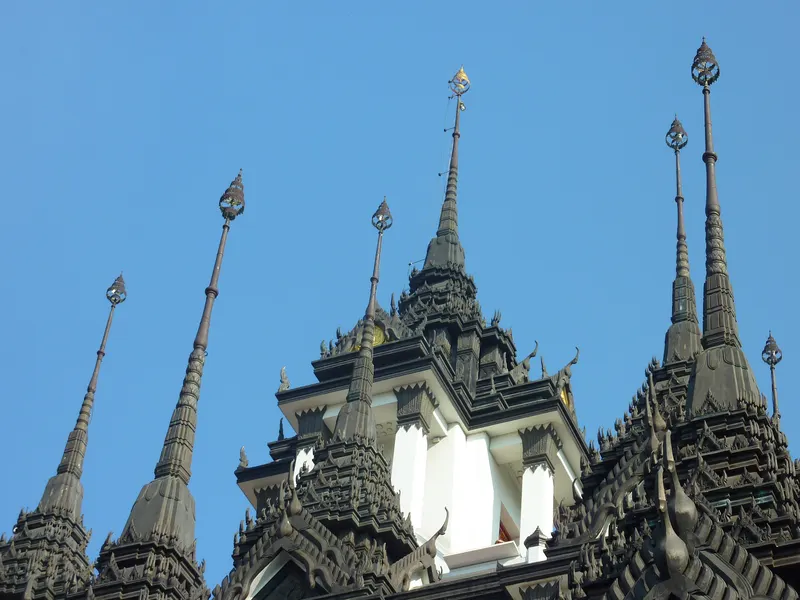
The real joy of this corner is that everything worth seeing is within a slow, atmospheric walk. Just across the canal stands Loha Prasat, the unmistakable iron-spired temple at Wat Ratchanatda; a short stroll south brings you to Wat Suthat and the towering red Giant Swing. String them together in a single morning while it is cool, then drift toward the amulet stalls and old shophouse noodle shops that make this part of town feel like a village inside the megacity.
If you are building a wider day around the Old City, anchor it to a ready-made temple route rather than improvising in the heat. The headline trio — Wat Pho, the Grand Palace and Wat Arun — sit a kilometer west on the river, so a heat-smart plan does the big temples early and saves the breezy Golden Mount climb for late afternoon.
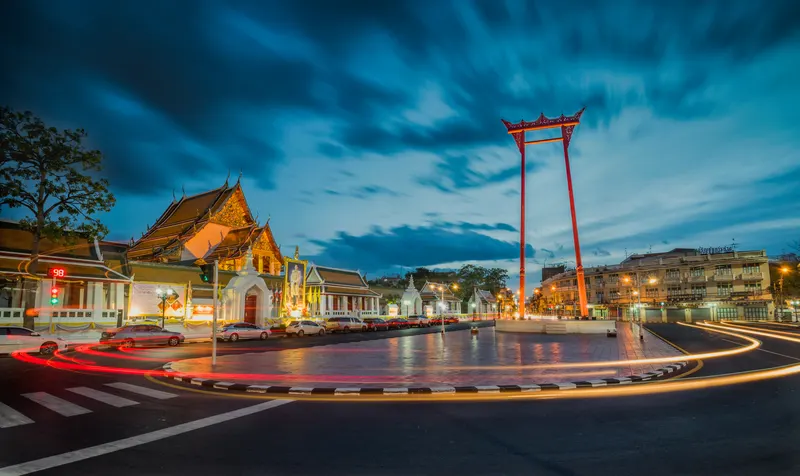 Wat Suthat & the Giant Swing
A serene royal hall and the bold red Giant Swing, a short walk south.
 Old Bangkok walk
A self-guided route linking the Old City temples on foot.
Temple day routeA heat-smart one-day plan that folds in the Golden Mount climb.
 Things to do in Bangkok
Where the Golden Mount sits among the city's essential sights.
The Grand Palace & Wat Phra Kaew
Bangkok's most iconic complex — the former royal residence and the Temple of the Emerald Buddha. Go early; strict dress code.
Map pins
Map data © OpenStreetMap contributors · Tiles © OpenFreeMap
Sources
- Tourism Authority of Thailand ↗
Official tourism information for Wat Saket and the Old City.
- MRT Bangkok (MRTA) ↗
Official Blue Line operator for the nearest station, Sam Yot.